Tooth decay is one of the most common chronic childhood conditions in Australia, and it can begin much earlier than parents realise. Once the first baby tooth erupts, children become vulnerable to early enamel breakdown — especially if healthy oral habits aren’t established early.
This guide explains the early signs parents should look for, what causes tooth decay in children, and the most effective treatments to protect their developing smile.
Table of Contents
What Is Children’s Tooth Decay?
Children’s tooth decay is the gradual destruction of enamel caused by bacteria feeding on sugars. This process produces acids that weaken the tooth surface, leading to cavities if not treated early. Baby teeth have softer enamel, which means decay can spread faster than in adults.
Untreated decay can lead to:
- Pain and sensitivity
- Difficulty eating
- Infection
- Early loss of baby teeth
- Misalignment of adult teeth
Early detection prevents these complications.
Early Signs of Tooth Decay in Children
Early tooth decay often begins silently. The first warning signs include white spots, sensitivity, discoloration, or tiny holes on the tooth surface. Recognising these early changes helps prevent deeper cavities and pain.
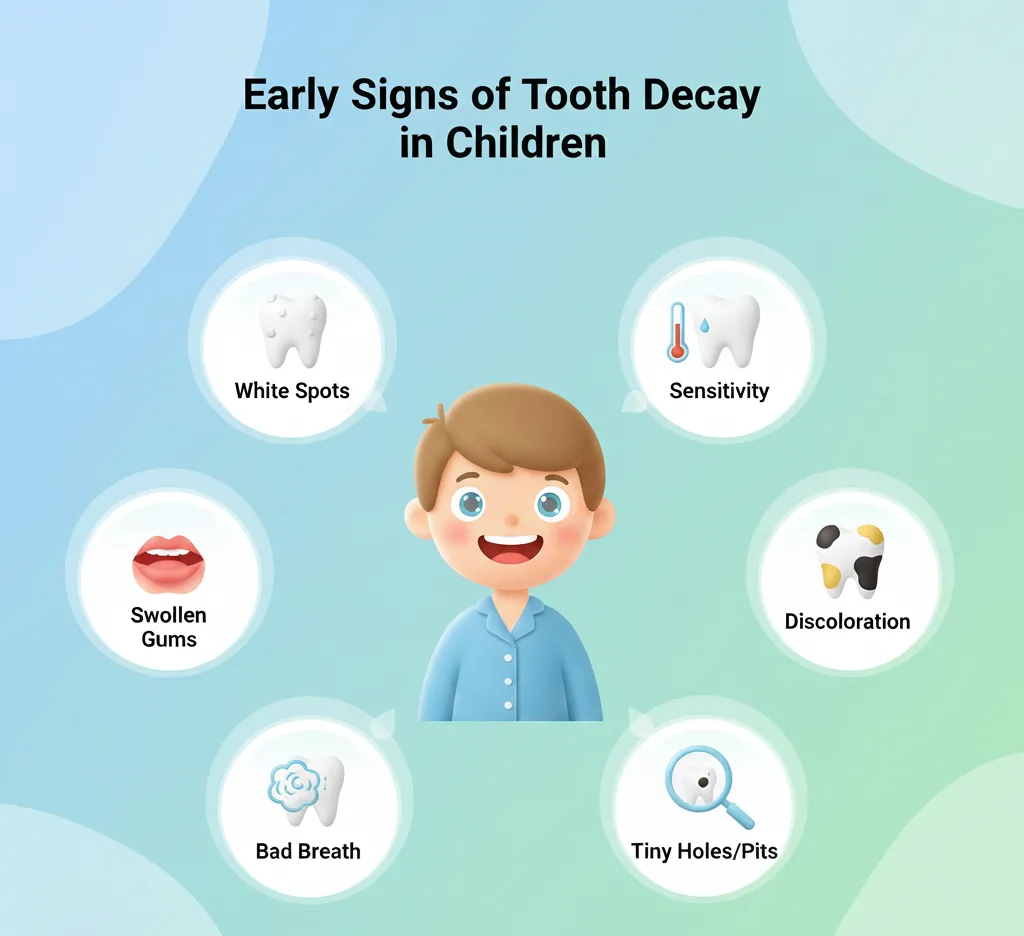
- White or Chalky Spots (First Stage of Early Tooth Decay)
- These spots appear near the gumline and indicate the enamel is losing minerals. At this stage, decay can still be reversed.
- Tooth Sensitivity
- Your child may complain of discomfort when eating cold, hot, or sweet foods. Sensitivity is often one of the earliest symptoms of enamel breakdown.
- Yellow, Brown, or Black Spots
- Discolouration on the tooth surface means decay has progressed deeper into the enamel.
- Visible Holes or Pits
- Small holes are a clear sign of cavities in children and require dental treatment as soon as possible.
- Bad Breath or Unpleasant Taste
- Persistent odour may be caused by bacteria trapped in decayed areas of the teeth.
- Swollen Gums or Irritation
- When decay spreads to the tooth nerve, swelling, redness, or pain can occur.
👉 If you notice any of these signs, book a dental visit as soon as possible. Early treatment prevents major procedures.
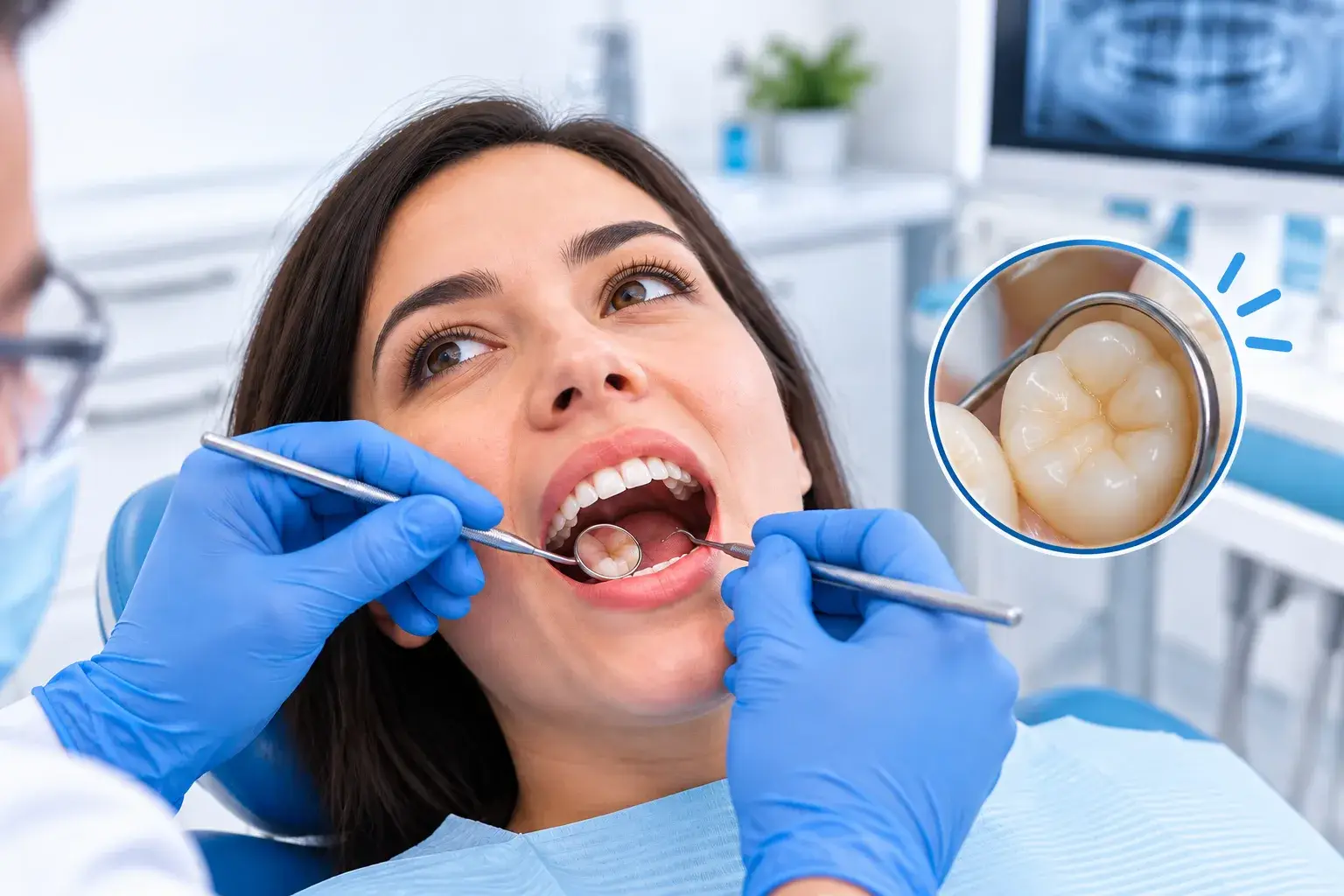
You can schedule a gentle check-up through our Paediatric dentistry service, where our team is experienced in assessing early tooth decay and providing child-friendly care.
What Causes Tooth Decay in Children?
Tooth decay is caused by a combination of bacteria, frequent snacking, sugary drinks, and inadequate oral hygiene. Even if a child brushes, certain habits can still lead to enamel damage.
- Bacteria & Plaque Build-Up
- Plaque forms constantly on teeth. When not removed properly, it hardens and allows bacteria to produce acid that attacks enamel.
- Frequent Snacking or Grazing
- Constant snacking—especially on sugars or starches—keeps the mouth acidic, increasing the risk of tooth decay.
- Sweet Drinks & Bedtime Bottles
- Juice, soft drinks, flavoured milk, and even formula can cause rapid decay if left on teeth overnight. This is known as “baby bottle decay.”
- Poor Oral Hygiene Habits
- Skipping brushing, rushing through it, or using the wrong technique allows bacteria to flourish.
- Low Fluoride Exposure
- Fluoride strengthens enamel. Children who do not use fluoride toothpaste or who consume mostly bottled water may lack fluoride protection.
- Medical or Developmental Factors
- Some children naturally have softer enamel or experience dry mouth, increasing susceptibility to decay.
Understanding what causes tooth decay helps parents make informed changes at home to protect their child’s teeth.
How Is Children’s Tooth Decay Treated?
Treatment depends on how early the decay is detected. Early stages can often be reversed, while advanced decay requires restorations.
- Remineralisation (Non-Invasive Treatment)
- For early tooth decay, remineralising treatments help rebuild enamel before cavities form. This may include:
- Fluoride varnish
- Remineralising toothpaste
- Dietary guidance
- Improved brushing techniques
- This is the most effective and comfortable solution when decay is caught early.
- For early tooth decay, remineralising treatments help rebuild enamel before cavities form. This may include:
- Tooth-Coloured Fillings
- If a cavity has formed, the decayed portion is removed and replaced with a tooth-coloured filling. This restores strength and prevents further breakdown.
- Stainless Steel Crowns
- Large cavities in baby molars may require crowns for long-term protection. These crowns are durable and prevent bacteria from re-entering the tooth.
- Pulp Therapy (Nerve Treatment)
- If decay reaches the tooth pulp (nerve), we may need to perform a gentle baby root canal to relieve pain and preserve the tooth.
- Extraction
- If a tooth is severely damaged, removal may be necessary. In some cases, a space maintainer will be recommended to ensure proper eruption of adult teeth.
Every treatment is personalised to your child’s comfort, age, and dental needs.
How to Prevent Tooth Decay in Children
Good daily habits are the most powerful way to prevent cavities.
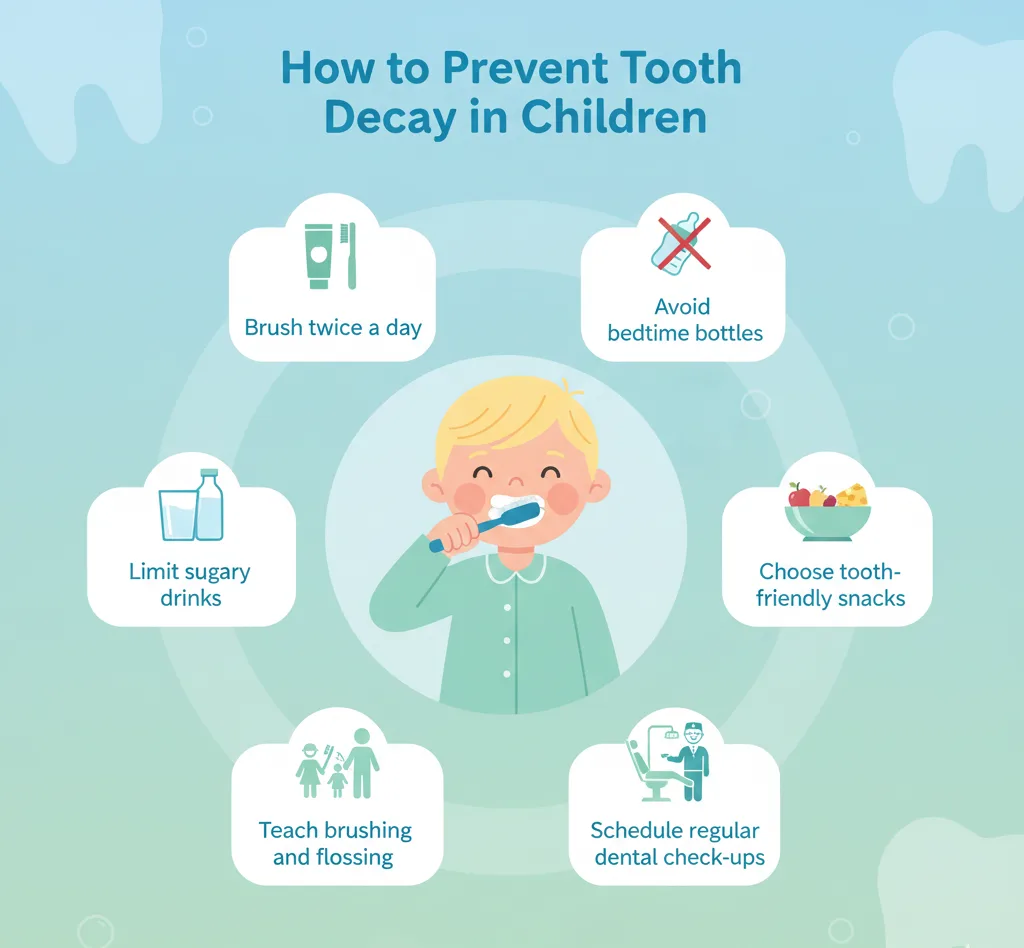
- Brush twice a day with fluoride toothpaste
- Use a smear for ages under 3 and a pea-sized amount for older children.
- Start dental hygiene early
- Clean your baby’s gums before teeth erupt; start brushing as soon as the first tooth appears.
- Limit sugary snacks and drinks
- Water should be the primary drink between meals.
- Avoid bedtime bottles
- If needed, give only water at night.
- Choose tooth-friendly snacks
- Cheese, yoghurt, nuts, and fruits are better options than sticky sweets.
- Teach proper brushing and flossing
- Parents should supervise brushing until at least age 8.
- Schedule regular dental check-ups
- Routine visits allow early detection and support healthy habits.
When Should Your Child Visit the Dentist?
Schedule the first dental visit by age 1 or within 6 months of the first tooth erupting.
Regular check-ups every six months help track tooth development, detect early decay, and build confidence in the dental environment.
At Richmond & Springvale Dental Group, we create a calm, positive atmosphere to ensure your child feels comfortable from their very first visit.
Protect Your Child’s Smile with RS Dental
Children’s tooth decay is common, but it does not have to be inevitable. Understanding the early signs, recognising what causes tooth decay, and choosing professional care early can save your child from pain, infection, and complex dental procedures.
If you’re concerned about cavities in children or want expert advice on tooth decay treatment, our friendly team at RS Dental is here to help.
Book a visit today at our Abbotsford or Springvale clinic—your child’s healthy smile begins now.
FAQs
1. What does early tooth decay look like in children?
Early decay appears as white chalky spots, mild discoloration, or tiny pits on the tooth surface.
2. Can tooth decay be reversed in kids?
Yes — early enamel decay can be reversed with fluoride treatment, improved brushing, and diet changes.
3. What causes tooth decay even if my child brushes?
Frequent snacking, sugary drinks, bedtime bottles, or poor brushing technique can still cause decay.
4. How fast does tooth decay progress in baby teeth?
Much faster than in adults because baby teeth have softer enamel.
5. When should I take my child to the dentist?
By age 1, or when the first tooth appears, with follow-ups every six months.