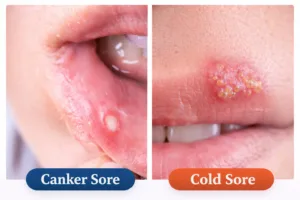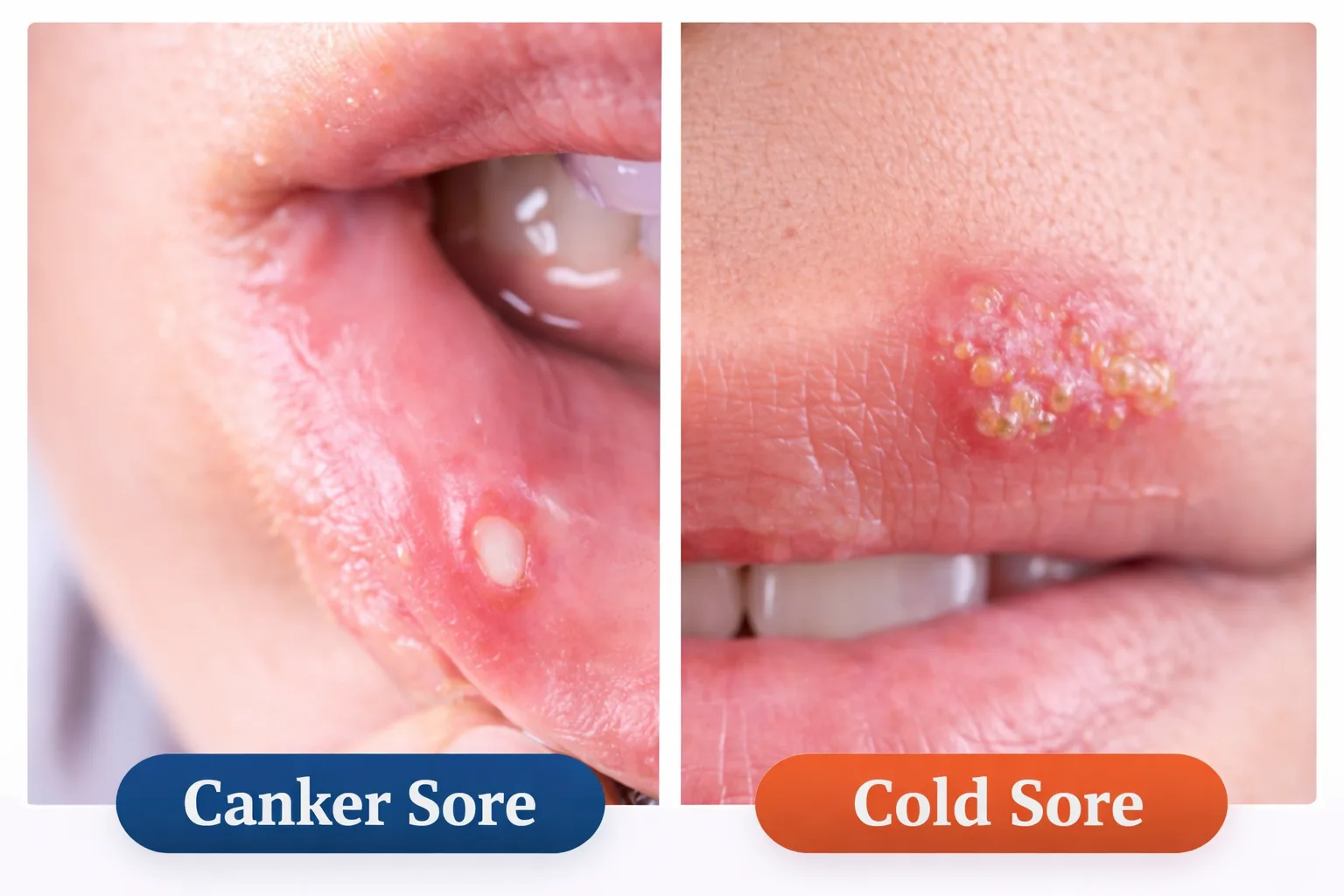
Canker sores and cold sores are two common types of mouth sores, but they are very different conditions. Canker sores are small, non-contagious ulcers that develop inside the mouth, while cold sores are contagious blisters caused by the herpes simplex virus (HSV-1) that usually appear on or around the lips.
If you’ve ever felt a painful spot in your mouth or noticed a blister forming on your lip, it’s easy to confuse canker sores vs cold sores. Although they may look similar at first, they differ in their location, cause, and treatment.
Understanding the difference can help you manage symptoms properly and know when to seek professional care.
Note: While many mouth sores heal on their own, persistent or recurring sores should always be evaluated by a dental professional.
Quick Difference Between Canker Sores and Cold Sores
The biggest difference between canker sores and cold sores is their location and cause.
- Canker sores occur inside the mouth and are not contagious.
- Cold sores appear outside the mouth, usually on the lips, and are caused by the herpes simplex virus (HSV-1), making them contagious.
Knowing this key distinction can help you quickly identify which type of sore you are dealing with.
What Are Canker Sores?
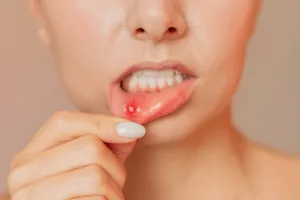
Canker sores, also called aphthous ulcers, are small, shallow ulcers that form inside the mouth.
They usually appear on:
- The inside of the cheeks
- The inner lips
- The tongue
- The soft palate
- The base of the gums
Unlike cold sores, canker sores are not contagious and cannot spread from person to person.
What Causes Canker Sores?
The exact cause of canker sores isn’t always clear, but several factors can trigger them.
Common triggers include:
- Minor mouth injuries (biting your cheek or aggressive brushing)
- Stress
- Hormonal changes
- Food sensitivities such as acidic or spicy foods
- Vitamin deficiencies (B12, iron, folate)
- A weakened immune system
Certain medical conditions, such as celiac disease or inflammatory bowel disease, may also increase the risk of developing recurrent canker sores.
Symptoms of Canker Sores
Canker sores usually have distinctive characteristics.
Common symptoms include:
- Small round or oval sores
- White, yellow, or grey centre
- Red border around the ulcer
- Pain when eating, drinking, or speaking
Canker sores usually heal naturally within one to two weeks, although some mouth ulcers may require treatment.
What Are Cold Sores?
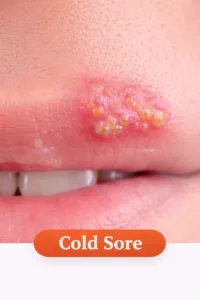
Cold sores are fluid-filled blisters caused by the herpes simplex virus (HSV-1).
They typically appear:
- On the lips
- Around the mouth
- Occasionally on the nose or chin
Unlike canker sores, cold sores are contagious and can spread through close contact.
What Causes Cold Sores?
Cold sores occur when the herpes simplex virus (HSV-1) becomes active. After the initial infection, the virus stays dormant in nerve cells and can reactivate later in life.
Common triggers include:
- Stress
- Fever or illness
- Sun exposure
- Hormonal changes
- Fatigue
When triggered, the virus travels to the skin surface and causes a cold sore outbreak.
Symptoms of Cold Sores
Cold sores usually develop in stages.
Typical symptoms include:
- Tingling or burning sensation around the lips
- Small fluid-filled blisters
- Blisters break open and release fluid
- Crusting and scabbing
- Healing within 7 to 10 days
Cold sores may also cause mild swelling or tenderness around the affected area.
Canker Sores vs Cold Sores: Key Differences
Here is a quick comparison to clearly understand canker sores vs cold sores.
| Feature | Canker Sores | Cold Sores |
|---|---|---|
| Location | Inside the mouth | On or around the lips |
| Contagious | No | Yes |
| Cause | Immune response or triggers | HSV-1 virus |
| Appearance | Single ulcer with white centre | Cluster of fluid-filled blisters |
| Healing Time | 1–2 weeks | 7–10 days |
| Scabbing | No | Yes |
Understanding these differences is important because treatment depends on the cause of the sore.
How to Treat Canker Sores
Most canker sores heal naturally without medical treatment. However, several remedies can help reduce discomfort.
Common treatments include:
- Saltwater rinses
- Baking soda mouth rinse
- Over-the-counter numbing gels containing:
- Benzocaine
- Hydrogen peroxide
- Fluocinonide
- Avoiding spicy or acidic foods
- Using a soft-bristled toothbrush
If canker sores are large, extremely painful, or frequently recurring, a dentist may prescribe medicated mouth rinses or topical corticosteroids.
How to Treat Cold Sores
Because cold sores are caused by a virus, treatment focuses on reducing symptoms and controlling outbreaks.
Treatment options include:
Over-the-counter treatments
- Antiviral creams containing docosanol
- Topical numbing creams with lidocaine or benzocaine
Prescription medications
- Acyclovir
- Valacyclovir
- Famciclovir
Other helpful measures include:
- Applying a cold compress
- Avoiding touching or picking the blister
Starting antiviral treatment during the early tingling stage can help shorten the outbreak.
Since cold sores are contagious, it is important to avoid:
- Kissing
- Sharing utensils
- Sharing lip balm
This is especially important during an active outbreak.
Can Children Get Canker or Cold Sores?
Yes, children can develop both conditions.
However:
- Canker sores are more common in teenagers and young adults.
- Cold sores may appear after a child’s first exposure to HSV-1.
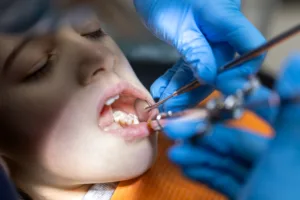
If a child experiences frequent or severe mouth sores, professional evaluation is recommended.
How Do I Know if I Have a Canker Sore or a Cold Sore?
Location is usually the biggest clue.
- If the sore is inside your mouth, it is most likely a canker sore.
- If it appears on the lip or outside the mouth, it is most likely a cold sore.
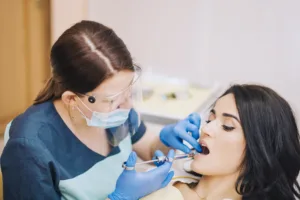
If you’re unsure, a dental professional can provide an accurate diagnosis.
Are Cold Sores Sexually Transmitted?
Cold sores are caused by HSV-1, which spreads through close contact such as kissing.
HSV-1 can sometimes spread through oral contact during sexual activity, but most cold sores are not classified as sexually transmitted infections.
Can Stress Cause Both Canker Sores and Cold Sores?
Yes. Stress is a known trigger for both conditions.
- In canker sores, stress may weaken the immune response and trigger ulcers.
- In cold sores, stress can reactivate the dormant HSV-1 virus.
Managing stress may help reduce outbreaks.
Why Do I Keep Getting Canker Sores?
Recurring canker sores may be linked to:
- Nutritional deficiencies
- Hormonal changes
- Food sensitivities
- Immune system issues
A dental check-up can help identify the underlying cause and recommend appropriate treatment.
When Should I See a Dentist?
You should seek professional dental advice if:
- The sore lasts longer than two weeks
- It becomes unusually large or painful
- You experience frequent outbreaks
- You develop fever or difficulty swallowing
Persistent mouth sores should always be evaluated to rule out underlying health issues.
Expert Care for Your Oral Health
Mistaking a cold sore for a canker sore can lead to using the wrong treatment and prolong your discomfort.
If you’re unsure about the cause of your mouth sore, the dentists at Richmond & Springvale Dental Group can provide an accurate diagnosis and recommend the most effective treatment.
Visit our Abbotsford or Springvale clinics for professional advice and personalised dental care.
Book your appointment today and keep your oral health in the best possible condition.