
You brush twice a day, floss regularly, and still notice a yellow tint when you look in the mirror — it’s frustrating and confusing. Many people with excellent oral hygiene ask the same question: Why are my teeth yellow when I brush them every day?
The truth is, brushing is essential for oral health, but it doesn’t always prevent tooth discolouration. In many cases, yellowing happens beneath the surface, where a toothbrush simply can’t reach.
Let’s break down why this happens and what you can do to restore a brighter, healthier smile.
Why Brushing Alone Doesn’t Always Whiten Teeth
Brushing is designed to remove plaque and surface debris, not to change the natural colour of your teeth.
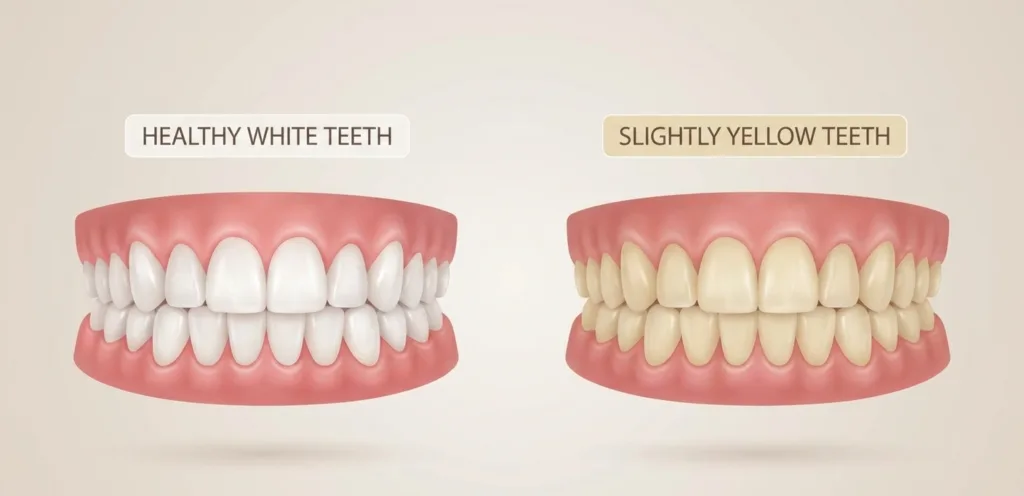
Teeth often appear yellow because:
- Enamel becomes thinner over time, revealing the naturally yellow dentin underneath
- Deep stains develop within the tooth structure
- Surface pigments become embedded and resistant to brushing
So while brushing is vital for preventing decay and gum disease, it isn’t always a whitening solution.
Understanding the Two Types of Tooth Stains
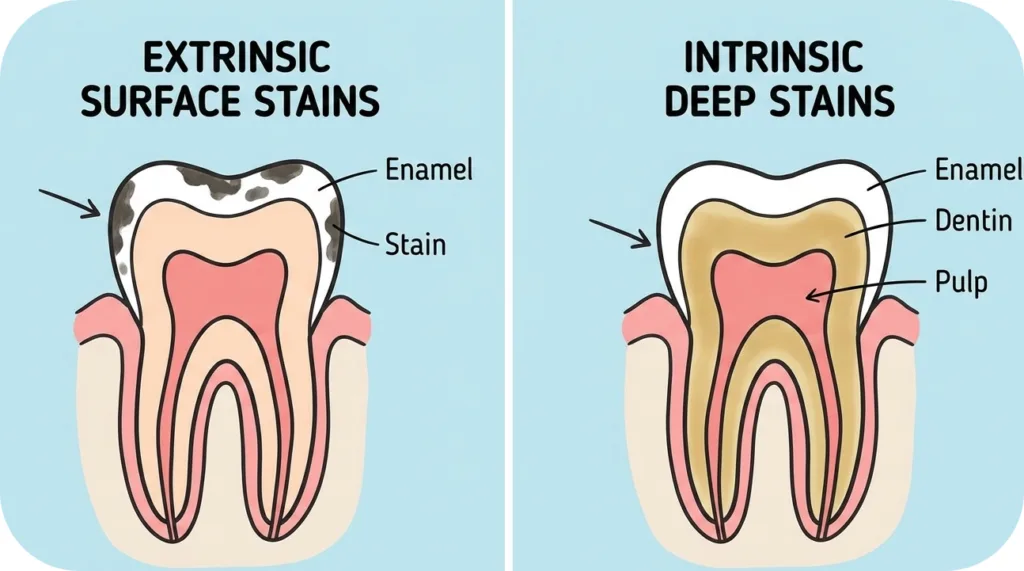
Extrinsic Stains (Surface Stains)
These stains sit on the outer enamel and are caused by:
- Coffee, tea, red wine, and soft drinks
- Certain foods
- Tobacco use
Extrinsic stains are usually easier to remove with professional cleaning or whitening.
Intrinsic Stains (Internal Stains)
These stains develop inside the tooth, beneath the enamel, and can result from:
- Certain medications
- Dental trauma
- Excessive fluoride exposure during development
- Natural ageing
Intrinsic stains are more stubborn and often require professional cosmetic treatment.
Why Your Teeth Stay Yellow Despite Daily Brushing
Even with good oral hygiene, teeth may remain yellow due to:
- Natural enamel thinning with age
- Frequent consumption of staining foods and drinks
- Brushing too hard, which can wear enamel
- Inadequate flossing that allows plaque buildup near the gums
- Genetics affecting natural tooth colour
- Lifestyle factors such as smoking, teeth grinding, or specific medications
What Deficiency Causes Yellow Teeth?
Nutritional deficiencies are not the most common cause of yellow teeth, but they can contribute to weaker enamel over time, especially when combined with other factors.
Common deficiencies linked to tooth discolouration include:
- Calcium – essential for strong enamel
- Vitamin D – helps the body absorb calcium
- Vitamin C – supports gum health and enamel integrity
A balanced diet supports both oral health and overall wellbeing.
What Does Yellowing of Teeth Indicate?
Yellow teeth don’t automatically mean poor oral health. However, sudden or rapid colour changes may indicate:
- Enamel erosion from acidic foods or drinks
- Plaque and tartar buildup
- Early gum disease
If the colour change is noticeable or worsening, a dental assessment is recommended.
Can Yellow Teeth Become White Again?
Yes — in most cases, a brighter smile is absolutely achievable.
The right solution depends on the type of staining:
- Surface stains respond well to professional cleaning and whitening
- Deeper discolouration may require cosmetic treatments, but excellent results are still possible
How to Fix Yellowing Teeth
Professional Treatments
- Teeth whitening safely lightens teeth by several shades
- Dental veneers can cover severe or resistant discolouration
- Professional cleans remove tartar and surface stains brushing can’t reach
At-Home Care
- Brush twice daily for two minutes using:
- Fluoride toothpaste
- A soft-bristled toothbrush
- Floss daily to remove plaque between teeth
- Use antibacterial mouthwash to reduce bacteria
- If you grind your teeth, consider a custom night guard
Dietary Modifications
- Drink staining beverages through a straw
- Rinse your mouth with water after eating or drinking stain-causing foods
- Eat crunchy fruits and vegetables (such as apples and carrots) to stimulate saliva and help clean teeth naturally
How to Remove Yellow Stains from Teeth Naturally
Natural remedies may help with mild surface stains, but they should be used cautiously:
- Use baking soda sparingly (no more than once a week)
- Try oil pulling with coconut oil to reduce plaque
- Eat crunchy fruits and vegetables
- Use whitening toothpaste for gradual improvement
⚠️ Important: Avoid lemon juice and activated charcoal. These can permanently damage enamel and worsen discolouration. Always consult your dentist before trying home remedies.
Ready to See a Brighter Smile in the Mirror?
Persistent tooth discolouration isn’t just cosmetic — it can also signal enamel wear or underlying dental issues that need professional care.
At Richmond & Springvale Dental Group, our experienced dentists identify the true cause of discolouration and recommend the safest, most effective solution for your smile.
Whether you need a professional clean, whitening treatment, or cosmetic dentistry, we’re here to help.
Book your consultation at our Abbotsford or Springvale clinic today and take the first step toward a healthier, brighter smile.
People Also Ask
Does yellow teeth mean they are strong?
No. Tooth strength depends on enamel thickness and density, not colour.
Can yellow teeth be whitened with baking soda?
Baking soda can remove surface stains, but overuse can damage enamel. Use sparingly.
Why are my teeth yellow near the gums?
Plaque and tartar build up most easily near the gum line. Gum recession can also expose the root, which is naturally more yellow.
Is it normal for teeth to be slightly yellow?
Yes. Natural teeth are rarely pure white — a light ivory shade is normal.
Does coffee stain teeth permanently?
Not usually, but long-term staining can become internal and require professional treatment.
How long does professional whitening last?
Results typically last 6 months to 2 years, depending on diet, oral hygiene, and lifestyle habits.