
Is every six months the right answer?
Most people do well with a dental check-up and clean every six to twelve months. However, the right timing for you depends on your teeth, gums, health and habits, not a fixed rule.
The “twice a year” advice is a useful starting point. Some people with a very low risk of decay or gum disease may be able to go longer between visits. Others, such as people with gum disease, diabetes or a history of frequent fillings, may benefit from seeing us every three to four months.
At your first visit, we’ll examine your mouth, talk about your health history and recommend a recall interval that suits you. In this guide, we explain what affects that recommendation, what happens at a check-up and clean, and when to book in sooner.
What happens at a dental check-up and clean?
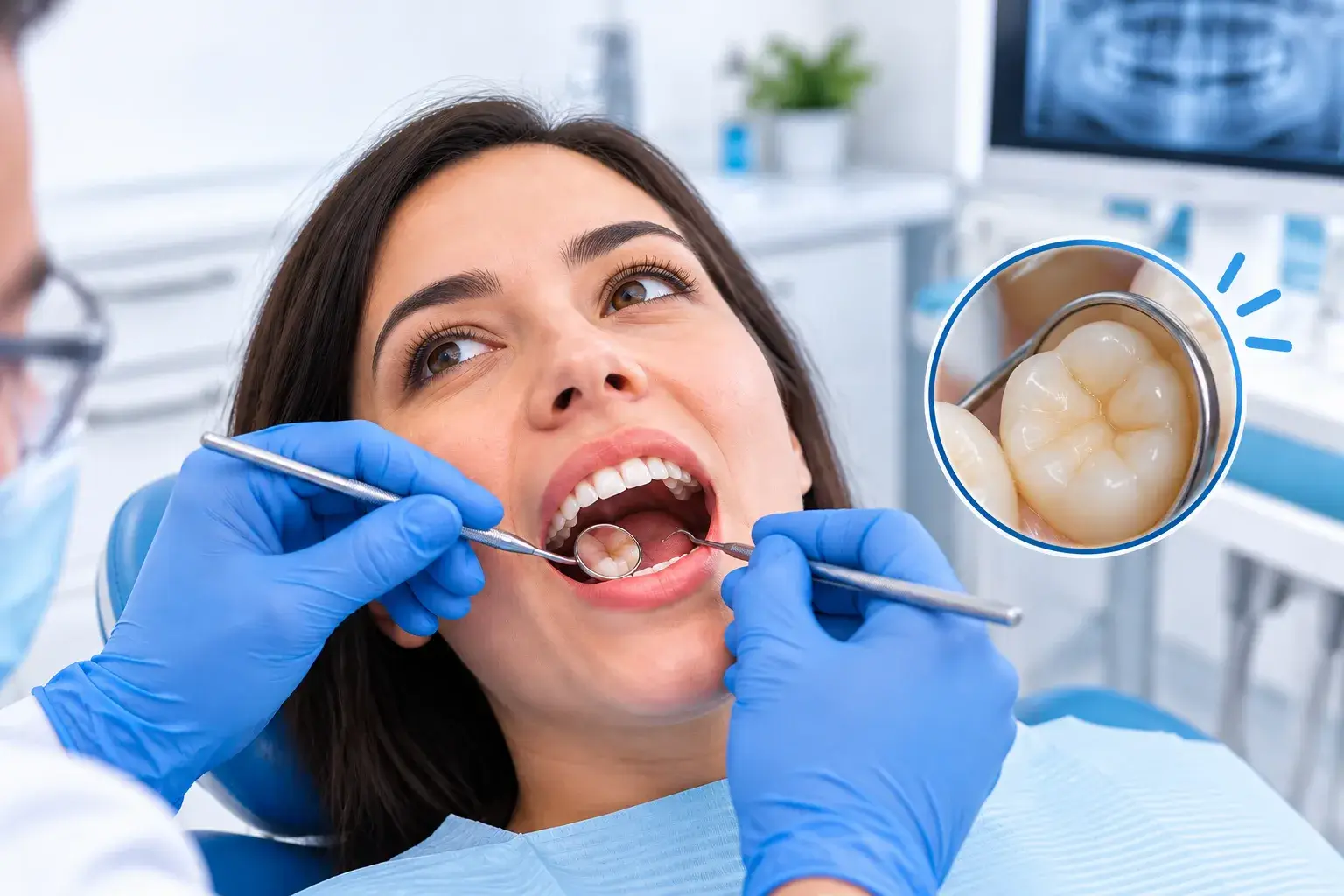
A routine visit usually takes 30 to 60 minutes and has two parts: the check-up (examination) and the clean.
The check-up
- Health history: We ask about any changes to your health, medications or symptoms since your last visit.
- Examination: We check each tooth for signs of decay, cracks and worn fillings, and look at your gums, tongue, cheeks and jaw.
- Gum check: We take small measurements around your teeth to help detect early gum disease before it causes symptoms.
- X-rays, if needed: Bitewing X-rays help us find decay between teeth that can’t be seen with the naked eye. Not everyone needs X-rays at every visit. Learn more about dental X-rays and OPGs.
- Oral cancer check: We visually check the soft tissues for any unusual patches or lumps.
The clean
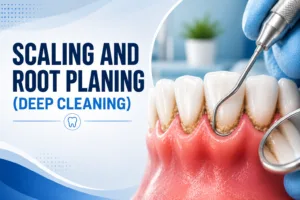
- Scaling: We remove hardened plaque (tartar or calculus) that brushing and flossing can’t shift.
- Polishing: We smooth tooth surfaces and remove surface stains.
- Fluoride, if recommended: We may apply a fluoride treatment to help strengthen enamel.
How often should you go? It depends on your risk
Your recall interval is based on your personal risk of tooth decay and gum disease. The table below shows general examples only. We’ll recommend an interval based on your individual oral health.
| Your situation | Typical check-up interval |
| Very low risk: healthy teeth and gums, rarely need fillings, good home care | Every 12 months (sometimes longer, if advised) |
| Low to moderate risk (most adults and children) | Every 6–12 months |
| Gum disease, or treated for it in the past | Every 3–4 months |
| Diabetes, smoking or vaping, dry mouth, or pregnancy | Every 3–6 months |
| Braces, aligners, implants, crowns or bridges | Every 6 months, or as advised during treatment |
| Frequent tooth decay or new fillings, or a high-sugar diet | Every 3–6 months |
Factors that may mean more frequent visits
- Gum disease: bacteria below the gumline build up again within a few months, so regular maintenance cleans help keep it under control. Read about scaling and root planing.
- Medical conditions: diabetes, some heart conditions and medications that cause dry mouth can increase the risk of dental problems.
- Pregnancy: hormonal changes can make gums more prone to swelling and bleeding.
- Smoking and vaping: both are linked to gum disease and slower healing.
- Dental work: fillings, crowns and implants need regular checks to find wear or problems early.
Children and teenagers
We recommend children see a dentist within six months of their first tooth appearing, or by their first birthday, whichever comes first. After that, we see most children every six months, as their teeth and jaws are changing quickly. Check when your child should first see a dentist.
Why regular check-ups matter
Many dental problems don’t hurt in their early stages. By the time a tooth aches, decay may already be deep enough to need a larger filling, a crown or root canal treatment.
Regular visits help us:
- Find decay early, when a small filling may be all that’s needed.
- Spot gum disease before it leads to bone loss or loose teeth.
- Remove tartar that brushing and flossing can’t. Learn the difference between plaque and tartar.
- Check existing dental work such as fillings, crowns and implants.
- Notice changes in soft tissues that may need further investigation.
Treating a problem early is usually simpler, quicker and less costly than treating it later.
Signs you should book in sooner
Don’t wait for your next scheduled check-up if you notice:
- Toothache or sensitivity to hot, cold or sweet foods
- Bleeding gums when brushing or flossing
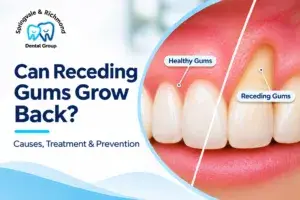
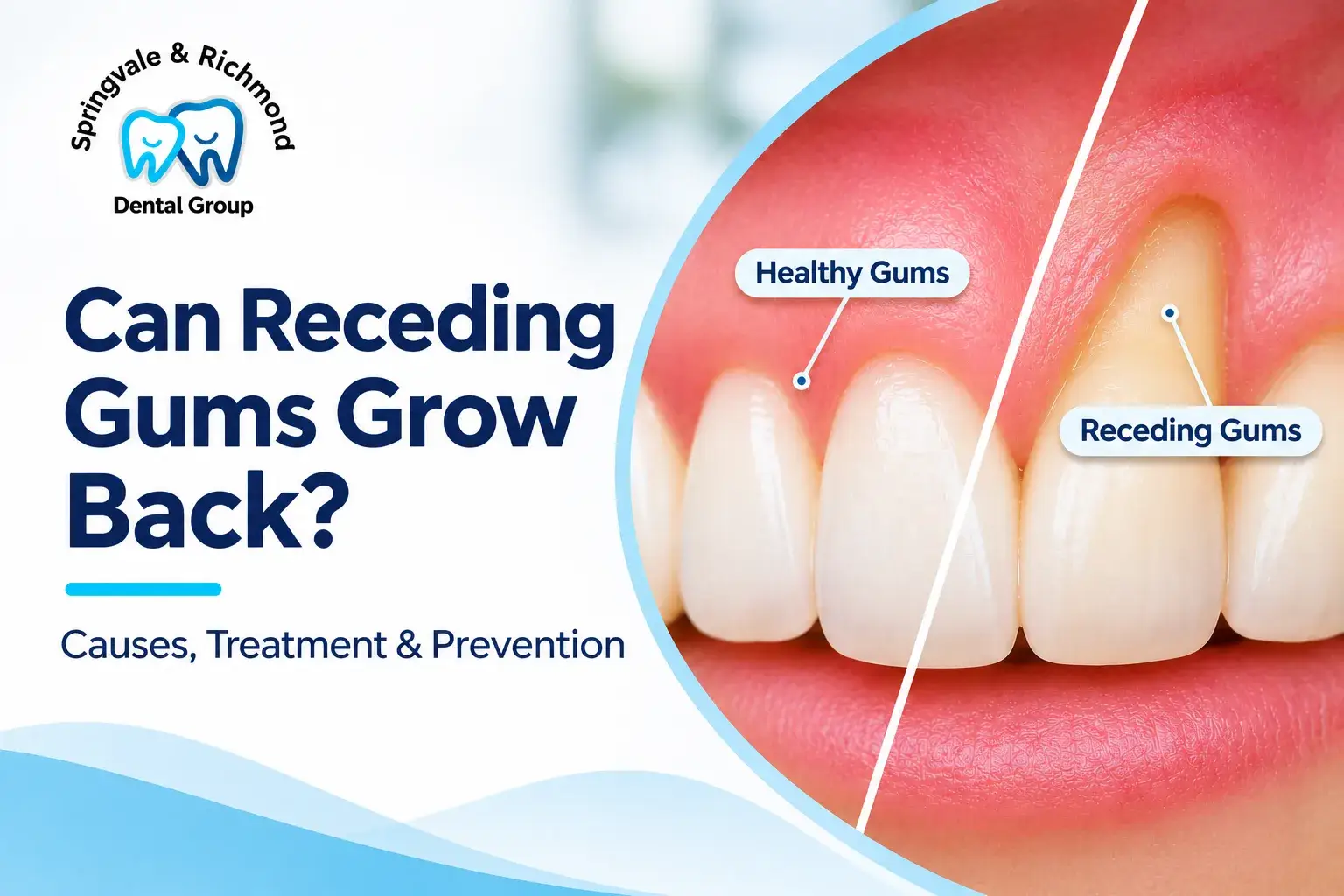
- Swollen, red or receding gums
- Bad breath that doesn’t go away
- A chipped, cracked or loose tooth, or a lost filling
- A mouth ulcer or patch that hasn’t healed after two weeks
- Pain or swelling in your jaw or face
What does a check-up and clean cost, and is it covered?
The cost depends on what you need on the day. A routine visit may include an examination, a scale and clean, fluoride and, if needed, X-rays. Each of these is a separate item on your invoice.
- Private health insurance: Many extras policies cover routine check-ups and cleans, often once or twice a year. How much you get back depends on your level of cover, annual limits and waiting periods, so check with your health fund.
- Child Dental Benefits Schedule (CDBS): Eligible children aged 0–17 can get benefits towards check-ups, cleans and other basic treatment, up to a capped amount over two calendar years. Read our CDBS guide.
- Government dental schemes: Eligible concession card holders and DVA clients may be able to access subsidised care. See our government dental schemes page.
Our team can give you an estimate of your costs before your appointment. Eligibility criteria and conditions apply to all health fund and government schemes.
Frequently asked questions
Is it OK to go once a year instead of every six months?
Can I just have a clean without a check-up?
A clean is usually done alongside an examination, so we can check for problems a clean alone wouldn’t pick up. Combining them also helps keep your dental records up to date.
Does a scale and clean hurt?
How long does a check-up and clean take?
Usually 30 to 60 minutes. A first visit, or one that includes X-rays, may take a little longer.
I haven’t been to the dentist in years. Where do I start?
Do I still need check-ups if I have no pain?
Yes. Decay and gum disease often cause no symptoms until they are advanced, so regular check-ups help find them early.
Book your check-up and clean in Abbotsford or Springvale
If you’re not sure when you’re due for a check-up, or it has been a while since your last visit, our team at Richmond & Springvale Dental Group can help. We’ll check your teeth and gums, clean away built-up tartar and recommend a check-up schedule that suits your needs.
Call our Abbotsford or Springvale clinic or book online.
This article is general information only and is not a substitute for advice from your dentist. Your dentist will recommend a check-up interval based on your individual oral health.