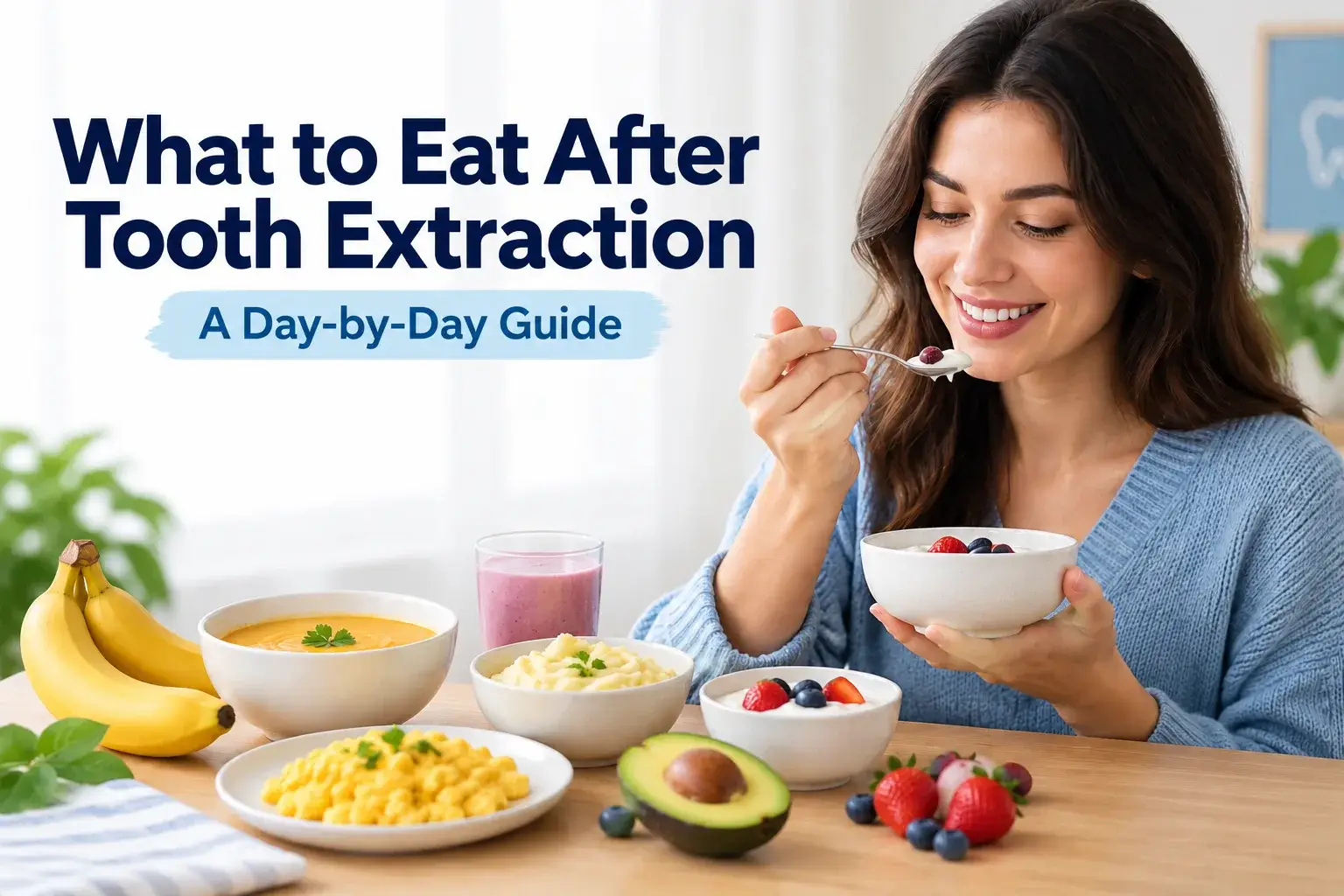
Knowing what to eat after tooth extraction can make your recovery more comfortable and help protect the extraction site while it heals. In the first few days, your mouth needs foods that are soft, easy to eat and unlikely to irritate the area.
You may also wonder when you can eat solid food after tooth extraction or how long it takes before you can return to your usual diet.
The answer depends on the type of extraction and how your mouth is healing. A simple extraction may allow you to gradually return to normal foods sooner, while a surgical extraction or wisdom tooth removal may require a longer period of soft foods.
At Richmond & Springvale Dental Group, we provide patients with personalised aftercare instructions based on their procedure and individual recovery.
When Can You Eat After Tooth Extraction?
Your dentist will give you specific instructions after the procedure, but in general, you should avoid eating while your mouth is still numb and follow your dentist’s instructions about when to start.
Once the initial bleeding has settled and you can safely eat, start with soft foods that require little or no chewing.
For the first day, choose foods that are:
- Soft and easy to swallow
- Cool or lukewarm rather than very hot
- Easy to chew
- Free from hard or crunchy pieces
- Gentle on the extraction area
Take small bites and, where possible, chew on the side opposite the extraction site.
If your dentist gives you different instructions, follow their advice because your recovery may depend on the type and complexity of the extraction.
What to Eat After Tooth Extraction
The best foods after tooth extraction are generally soft, smooth and nutritious. You don’t need to eat the same food throughout your recovery. Instead, gradually introduce more texture as your comfort improves.
Good options can include:
- Plain or Greek yoghurt
- Mashed potato
- Scrambled eggs
- Soft pasta
- Porridge
- Custard
- Applesauce or stewed fruit
- Smooth soups
- Cottage cheese
- Soft fish
- Avocado
- Soft-cooked vegetables
- Smoothies without seeds or hard pieces
If you have a smoothie, drink it from a glass rather than using a straw. Suction can disturb the healing blood clot.
What Can I Eat After Tooth Extraction in the First 24 Hours?
The first 24 hours are particularly important because the extraction site is beginning to heal.
Choose foods that require minimal chewing and are unlikely to disturb the area.
Yoghurt
Plain yoghurt is soft, easy to eat and requires little chewing. Choose varieties without nuts, seeds or crunchy toppings.
Mashed potato
Mashed potato is filling and easy to eat. Make sure it is comfortably warm rather than very hot.
Scrambled eggs
Soft scrambled eggs provide protein and are easy to chew once you are comfortable eating slightly more substantial food.
Smooth soup
Blended vegetable or other smooth soups can be a good option. Allow the soup to cool to a lukewarm temperature before eating.
Custard
Custard and other smooth foods can be easy to eat when your mouth is tender.
Smoothies
A smoothie can provide fluids and nutrients when chewing is uncomfortable. Avoid seeds, hard pieces and drinking through a straw.
Soft fruit
Mashed banana or smooth applesauce can provide an easy-to-eat source of nutrients.
What to Eat After Tooth Extraction: Days 2–3
As your discomfort and swelling begin to improve, you may be able to introduce foods with slightly more texture.
Depending on your recovery, suitable options may include:
- Soft scrambled eggs
- Mashed vegetables
- Soft pasta
- Porridge
- Cottage cheese
- Soft noodles
- Well-cooked vegetables
- Mashed avocado
- Soft fish
- Tender foods that require minimal chewing
Continue avoiding foods that are hard, crunchy, sticky or likely to become trapped around the extraction site.
You should also continue chewing away from the extraction area whenever possible.
When Can I Eat Solid Food After Tooth Extraction?
Many people can gradually introduce soft solid foods after the first 24 to 48 hours, provided the extraction site is comfortable and healing normally.
However, solid food does not mean you should immediately return to hard or crunchy foods.
Start with soft foods such as:
- Scrambled eggs
- Soft pasta
- Mashed vegetables
- Soft fish
- Well-cooked noodles
- Porridge
- Soft rice dishes, where appropriate
As healing progresses, you can gradually increase the texture of your food.
If chewing causes pain or discomfort around the extraction site, return to softer foods and give the area more time to heal.
How Long After Tooth Extraction Can You Eat Normally?
There is no single recovery timeline that applies to everyone.
A straightforward extraction may allow a gradual return to a normal diet within several days, while surgical extractions and wisdom tooth removal can take longer.
A useful general progression is:
| Recovery stage | Foods to consider |
|---|---|
| First day | Soft, cool or lukewarm foods requiring little chewing |
| Days 2–3 | Soft foods with slightly more texture |
| Days 4–7 | Gradually introduce more foods as comfort improves |
| After the first week | Gradual return towards your normal diet if healing is progressing well |
Your dentist’s instructions should always take priority over a general timeline.
If the extraction was complex or involved wisdom teeth, you may need to remain on softer foods for longer.
What Foods Should You Avoid After Tooth Extraction?
Some foods can irritate the extraction site or make it easier to disturb the healing blood clot.
For the early recovery period, avoid or limit:
Hard and crunchy foods
Avoid foods such as:
- Chips
- Nuts
- Popcorn
- Hard biscuits
- Crackers
- Hard crusts
Small pieces can become lodged near the extraction site.
Very hot foods and drinks
Very hot food and drinks may irritate the area and can be uncomfortable while your mouth is healing.
Allow food and drinks to cool before consuming them.
Sticky or chewy foods
Chewy foods can place unnecessary pressure on the extraction area.
Spicy foods
Spicy foods may irritate the healing tissue and cause discomfort.
Foods with small seeds
Seeds and small food particles can become trapped around the extraction site.
Alcohol
Avoid alcohol during the early healing period, particularly if you have been prescribed medication or your dentist has specifically advised against it.
Carbonated drinks
Your dentist may recommend avoiding fizzy drinks during the initial recovery period depending on your procedure.
Can I Drink Through a Straw After Tooth Extraction?
It is generally recommended to avoid using a straw during the early healing period.
Drinking through a straw creates suction inside the mouth, which can disturb the blood clot in the extraction socket.
Instead, drink normally from a cup or glass.
This is particularly important during the first few days when the extraction site is vulnerable.
Can I Eat Hot Food After Tooth Extraction?
It is best to allow food to cool before eating it immediately after an extraction.
Very hot food or drinks can irritate the extraction site and may increase discomfort.
Lukewarm or comfortably cool foods are generally easier to tolerate during the early stages of recovery.
Can I Eat Meat After Tooth Extraction?
You may need to avoid tough or chewy meat during the early recovery period.
Once you are comfortable chewing, you can gradually introduce softer options such as tender fish or finely prepared meat.
Avoid chewing directly over the extraction site.
If a particular food causes pain or feels difficult to chew, choose something softer and try again later.
Can I Eat Rice After Tooth Extraction?
Rice may be difficult to eat immediately after an extraction because individual grains can become trapped around the healing area.
If you choose to eat rice later in your recovery, make sure it is soft and well cooked, and avoid chewing directly over the extraction site.
Follow your dentist’s specific instructions, particularly after a surgical extraction or wisdom tooth removal.
Can I Eat Bread After Tooth Extraction?
Soft bread may be introduced as your recovery progresses, but avoid hard crusts, toasted bread and chewy varieties during the early stages.
Choose soft pieces and chew away from the extraction area.
Can I Eat Chocolate After Tooth Extraction?
Soft chocolate may be easier to eat than hard or crunchy foods, but it is still important to avoid foods with nuts, hard pieces or sticky fillings during the early healing period.
Your priority should be protecting the extraction site rather than returning to your usual snacks immediately.
What Should I Drink After Tooth Extraction?
Staying hydrated is important during recovery.
Suitable options may include:
- Water
- Milk
- Smoothies without seeds
- Lukewarm soups
- Other drinks recommended by your dentist
Avoid using a straw during the early healing period.
You should also be cautious with very hot drinks and alcohol.
Why Is the Blood Clot Important After Tooth Extraction?
After a tooth is removed, a blood clot forms in the extraction socket.
This clot plays an important role in the early healing process by protecting the underlying tissues while the area begins to repair.
This is why your aftercare instructions focus on protecting the extraction site.
Activities such as vigorous rinsing, spitting, smoking or using a straw can disturb the clot.
If the clot becomes dislodged, you may develop a painful condition known as dry socket.
How Can I Protect the Extraction Site While Eating?
A few simple habits can make eating more comfortable during recovery:
- Choose soft foods initially.
- Take small bites.
- Chew on the opposite side of your mouth.
- Avoid hard, crunchy and sticky foods.
- Avoid using a straw.
- Avoid very hot foods and drinks.
- Follow your dentist’s aftercare instructions.
- Keep the rest of your mouth clean while being gentle around the extraction site.
Do not aggressively rinse or disturb the extraction socket unless your dentist has instructed you to do so.
What to Eat After Wisdom Tooth Extraction
Wisdom tooth removal can require a longer recovery than a straightforward tooth extraction.
For the first few days, soft foods such as yoghurt, mashed potato, scrambled eggs, smooth soups and smoothies without a straw can be easier to manage.
As swelling and discomfort improve, you can gradually introduce foods with more texture.
Because wisdom tooth removal can involve surgical extraction, always follow the specific aftercare instructions provided by your dentist.
When Should I Contact My Dentist After an Extraction?
Some discomfort, swelling and tenderness can be expected after a tooth extraction.
However, contact your dentist if you experience symptoms that concern you, particularly if your pain or swelling is getting worse rather than improving.
Seek dental advice if you experience:
- Severe or worsening pain
- Persistent or heavy bleeding
- Increasing swelling
- Fever
- Pus or unusual discharge
- A bad taste or smell that does not improve
- Difficulty opening your mouth
- Difficulty swallowing or breathing
If you have difficulty breathing or swallowing or develop rapidly increasing facial swelling, seek urgent medical attention.
Takeaway: What to Eat After Tooth Extraction
The key to eating after a tooth extraction is to start gently and gradually increase the texture of your food as your mouth heals.
Choose soft, easy-to-eat foods initially, avoid anything that could irritate or disturb the extraction site, and follow your dentist’s individual aftercare instructions.
If you have recently had a tooth removed and are unsure about what you can eat, contact Richmond & Springvale Dental Group for personalised advice about your recovery.
Need dental advice after a tooth extraction?
Our dental team can help you understand your recovery, answer questions about eating after extraction and assess any symptoms that concern you.
Book an appointment with Richmond & Springvale Dental Group today.