Has a tooth in your smile begun looking a bit taller lately? Or do you feel a sharp twinge near the gumline when you drink something cold? Patients regularly bring up this concern at our Abbotsford and Springvale dental clinics, and they often ask the same thing: can receding gums grow back?
Quick answer: Lost gum tissue does not regenerate by itself, and no shop-bought product, rinse or natural remedy has the power to rebuild it. The reassuring part is that recession can often be kept from worsening, while grafting may help cover bare roots. The earlier we check your gums, the more options you are likely to have.
In this guide, our team explains what is really happening, what causes recession, how we treat it, and what you can do at home to stop it getting worse.
What Are Receding Gums?
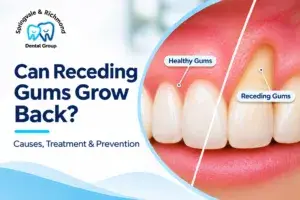
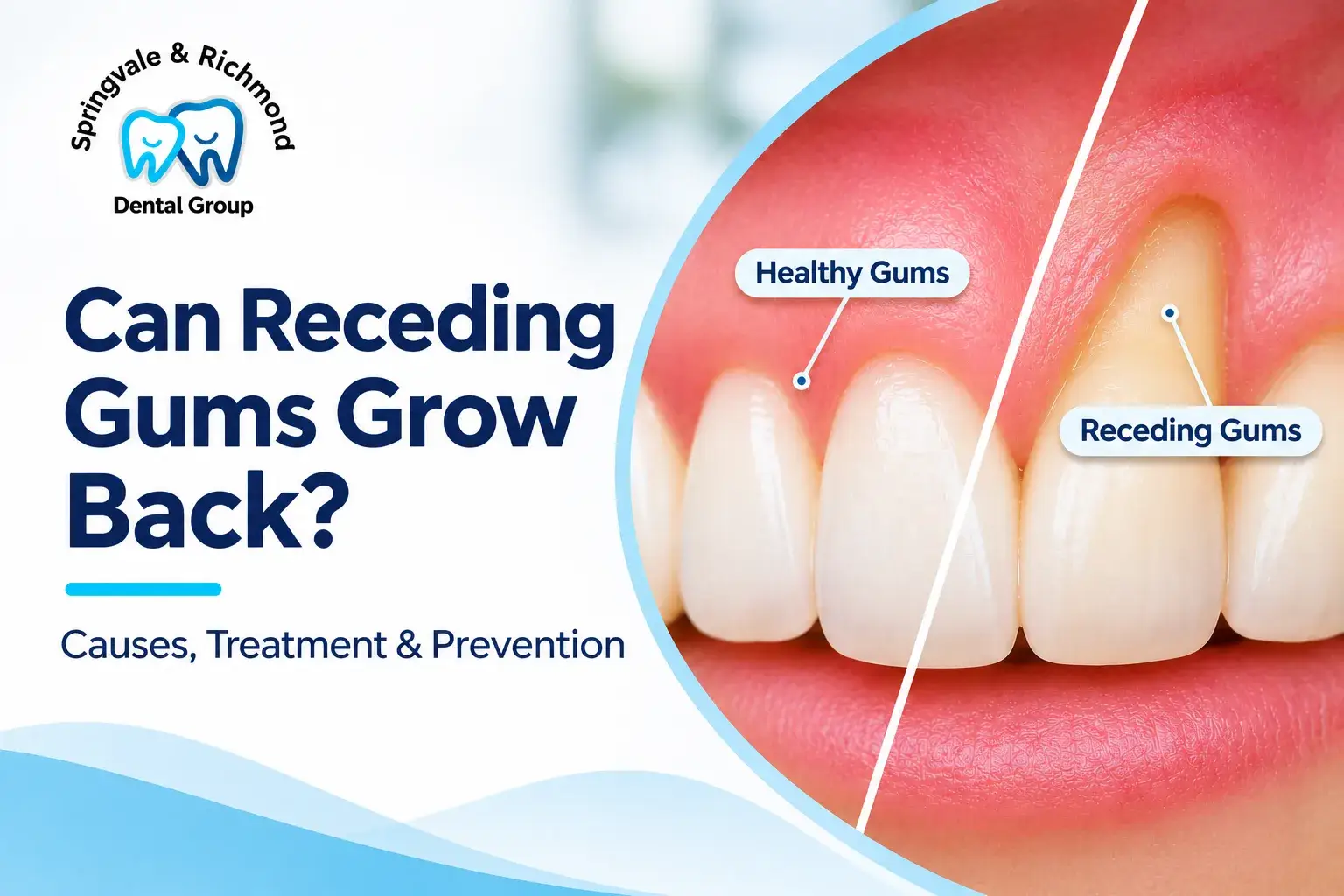
Gum recession (gingival recession) happens when the gum edge pulls back from the tooth, exposing part of the root. A root lacks a hard enamel shell, so once exposed, it often twinges and can wear away or decay more easily.
Lots of adults experience recession, and during our routine check-ups, we can often spot it early.
Signs to look out for include:
- Teeth that look longer than before
- Discomfort when eating ice cream, sipping coffee or brushing teeth
- A notch you can feel near the gumline
- Bleeding gums or teeth that feel loose
Will Receding Gums Ever Regrow on Their Own?
No. Unlike skin, gum tissue that has pulled away from a tooth does not rebuild itself. Once the attachment between the gum and the root is lost, better brushing alone will not bring it back. Some products online claim to “regrow” gums, but none has been shown to regrow gum tissue.
That does not mean nothing can be done. When we treat receding gums, we focus on two goals: stopping the recession by managing its cause, and, where suitable, repairing the gumline by adding tissue over the exposed root.
Can Gums Tighten Back Up After a Clean?
When gingivitis inflames gums, they tend to puff up and cover each tooth. After a professional clean or a deep clean (scaling and root planing), the swelling settles and the gums look firmer. This is a healthy sign of healing, but the gums have tightened, not grown back. The attachment that was lost is not replaced.
What Causes Gums to Recede?
At your assessment, we first analyse which of two main triggers is driving the recession, since that guides your treatment plan.
- Gum disease: bacteria trapped along the gumline trigger ongoing inflammation. If this progresses to periodontitis, it breaks down the bone and fibres that support the teeth, and the gum follows the bone down.
- Force or anatomy: good oral hygiene does not always prevent this kind of recession. Common causes include:
- Pressing hard while brushing, or using firm bristles
- Grinding or clenching your teeth
- Naturally thin gum tissue, which can run in families
- Crooked teeth or a tight frenum (the tissue joining the lip to the gum)
Smoking, diabetes, hormonal changes and fillings that sit below the gumline can also increase the risk. An analysis of Australia’s National Survey of Adult Oral Health estimated that smoking accounted for about a third (32%) of moderate to severe periodontitis among adults (Do et al., Journal of Clinical Periodontology, 2008).
Can Braces Cause Receding Gums?
Sometimes. Shifting teeth can stretch and strain gum tissue, particularly when it is naturally thin. That is why we check gum health before starting braces or Invisalign and keep an eye on it as the teeth move.
How Far Can Gums Recede Before Teeth Fall Out?
There is no single measurement. What matters most is how much bone support a tooth still has, not just how much root is showing. A tooth with mild recession from hard brushing can stay firm for many years, while a tooth with deep gum pockets and bone loss may become loose much sooner.
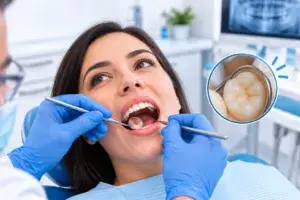
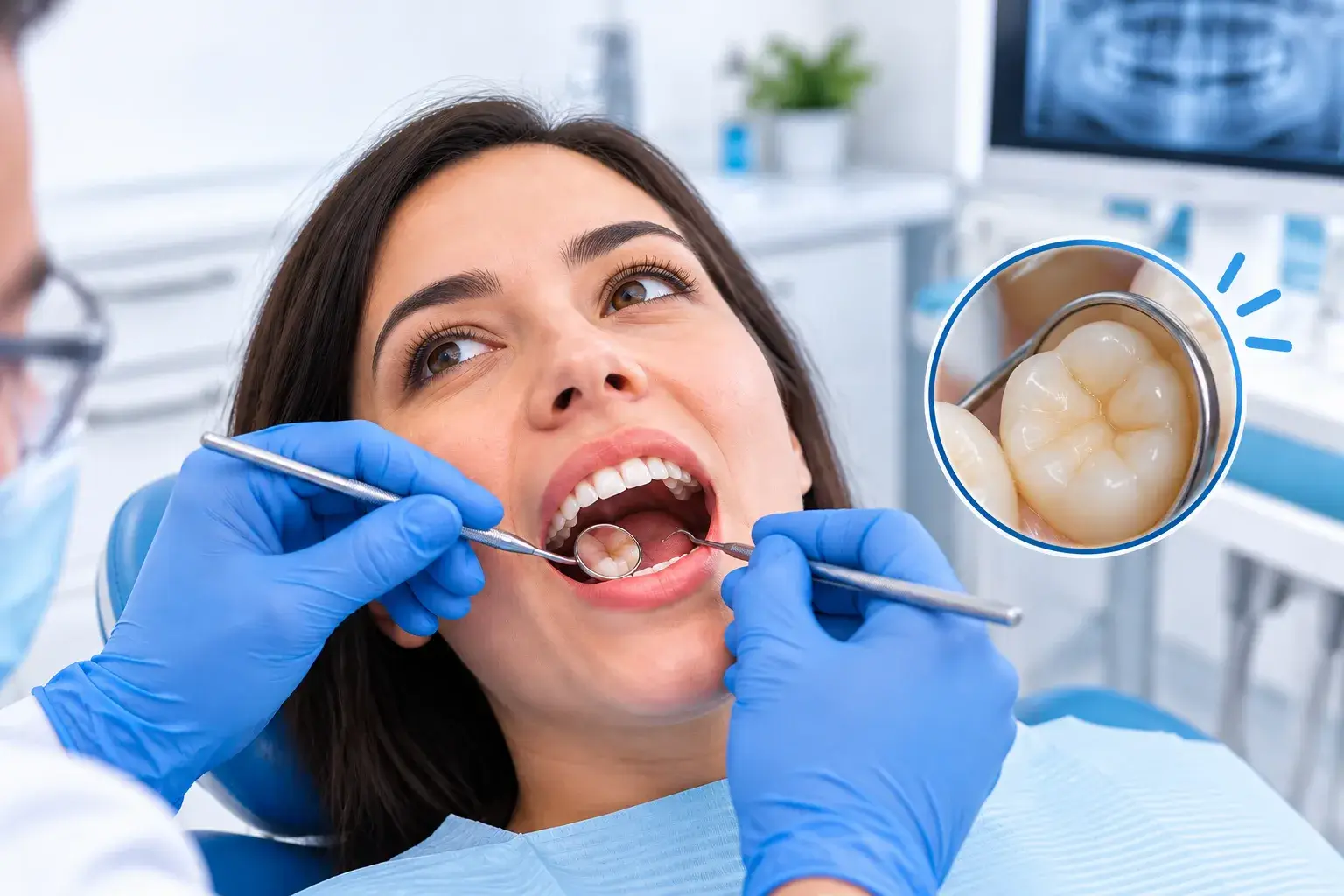
At your appointment, we measure your gums with a fine probe and take dental X-rays where needed to see what is happening below the surface.
What Treatments Do We Offer for Receding Gums?
Receding gums treatment depends on the cause, how much tissue has been lost and whether gum disease is present. We often grade recession by how much attachment has been lost between the teeth, as this helps predict how much of the root can realistically be covered.
| Recession type (Cairo classification) | What it means | Root coverage outlook |
| RT1 | Recession confined to the outer or inner face of the tooth | Full root coverage may be achievable |
| RT2 | Some attachment is also lost between the teeth | Partial coverage is more likely |
| RT3 | Significant loss between the teeth | Coverage is limited; focus is on stability |
1. Treating the Cause With Non-Surgical Care
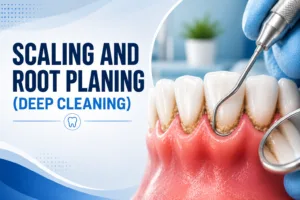
Any repair is less likely to last if the cause still exists. Where gum disease is involved, we usually start with scaling and root planing, a deep clean that removes plaque and tartar above and below the gumline. Some patients suit periodontal debridement instead, a lighter clean we use to break down bacterial build-up. When needed, we may combine professional cleaning with medication. Easing up on your brushing, or protecting your teeth from overnight grinding, can make a difference.
2. Protecting Exposed Roots
If the gum has only slipped a little, we can ease sensitivity with a desensitising toothpaste, tooth-coloured bonding or fluoride varnish.
3. Gum Graft Surgery
Gum graft surgery becomes an option once recession has progressed or the remaining gum is too fragile to hold up. Gum grafting can cover receding gums and protect exposed roots.
Most gum grafts today use connective tissue: a thin layer is lifted from just under the surface of your palate, then gently stitched over the uncovered root to protect it. Initial healing usually takes around two weeks.
4. Flap Surgery and Bone Regeneration
When gum disease has caused deeper pockets or bone loss, we may recommend flap surgery to clean deep below the gumline and reduce pocket depth. Where suitable, bone grafting or guided tissue regeneration can help rebuild some of the lost bone and supporting tissue. When you need specialist expertise, we arrange care with a registered periodontist.
Any surgical or invasive procedure carries risks. Before proceeding, you should seek a second opinion from an appropriately qualified health practitioner.
Can You Reverse Receding Gums Naturally?
You cannot reverse receding gums with home remedies. Saltwater rinses may briefly soothe sore gums, and small studies have looked at oil pulling, aloe vera and green tea for gum inflammation, but none have shown gum tissue regrows. Relying on them while gum disease continues can allow further bone loss.
What about mouthwash? It has a supporting role: antibacterial types help with plaque, fluoride types help guard roots, but neither rebuilds gums.
How to Stop Receding Gums: Our Everyday Advice
These are the habits we recommend to our patients:
- Use a soft-bristled brush, or an electric brush with a pressure sensor
- Brush gently in small circles at the gumline, twice a day, with fluoride toothpaste
- Clean between your teeth daily with floss or interdental brushes
- Quit smoking
- Keep up regular check-ups and cleans so we can spot changes early
- If you grind at night, ask us about a night guard.
When Should You See Us?
A tooth that seems taller, new or increased sensitivity, bleeding when you brush and any wobble are all reasons to see us. Swelling or pain around a tooth needs prompt care – get in touch today.
Concerned About Receding Gums? Talk to RS Dental
Receding gums do not grow back on their own, but early assessment gives you more options to protect your teeth. At RS Dental Group, our dental team can:
- Measure and record the gumline around each tooth
- Find the cause, whether it is gum disease, brushing habits, grinding or tooth position
- Provide non-surgical gum disease treatment, including scaling and root planing and periodontal debridement
- Provide or arrange flap surgery, gum grafting, bone grafting or guided tissue regeneration for cases that need surgery, with referral to a registered periodontist where needed
- Support your gum health with ongoing preventive care
Same-day visits may be available at our Abbotsford or Springvale clinics. Book today.
This article is general information only and is not a substitute for advice from your dentist. Your dentist will recommend treatment based on your individual oral health.