
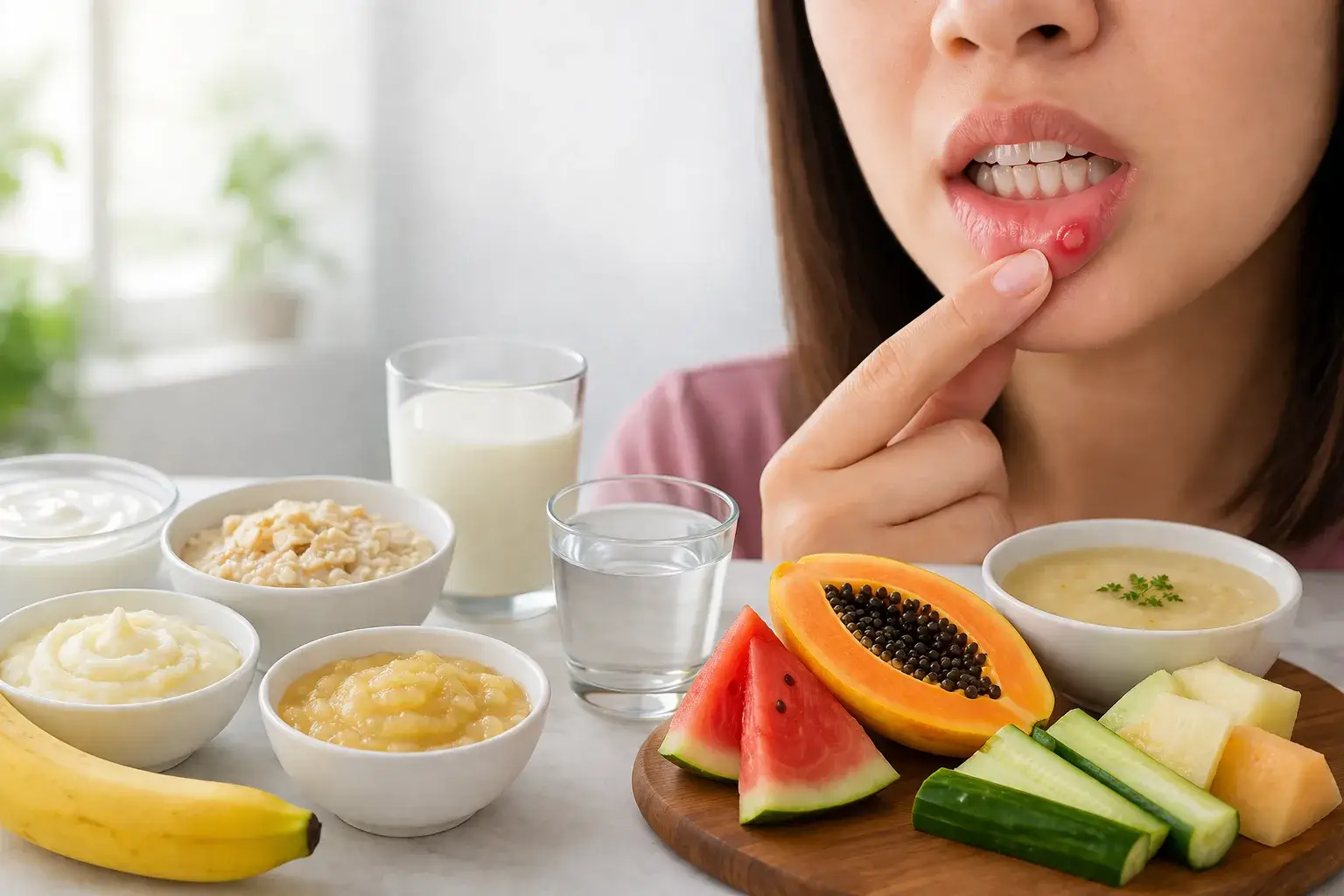
If you have a mouth ulcer right now, you already know that eating feels like a minefield. The wrong food can turn a manageable sore into a sharp, stinging reminder with every bite. The right food can protect the sore, reduce inflammation, and help it heal days faster.
This guide covers exactly what to eat, what to avoid, and which foods actively help mouth ulcers heal — based on what dentists recommend to patients at RS Dental every day.
Already looking for broader treatment advice? Read our full guide: How to Get Rid of Mouth Ulcers Fast
Table of Contents
What to eat when you have mouth ulcers
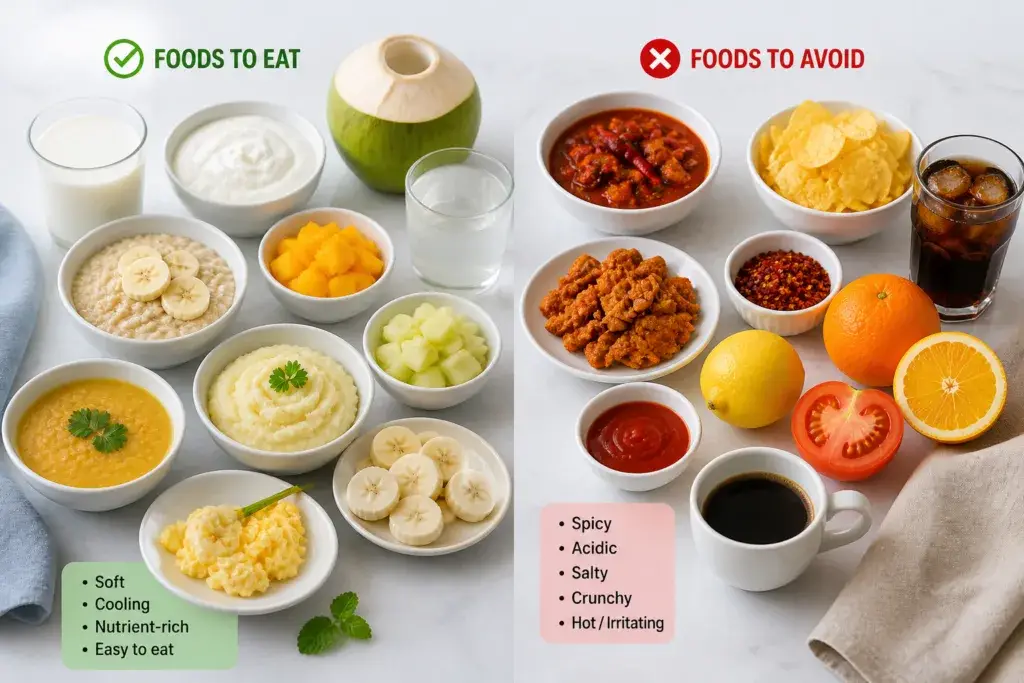
The goal when eating with a mouth ulcer is simple: choose foods that are soft, mild, cool or lukewarm, and non-acidic. These qualities reduce friction on the sore, avoid triggering the nerve endings, and give the tissue the best chance to heal undisturbed.
Good foods to eat when you have mouth ulcers include:
- Natural yoghurt — smooth, cool, and contains probiotics that support a healthy oral environment. Unsweetened is best.
- Oatmeal or porridge — soft, filling, and easy to eat without chewing hard. Let it cool slightly before eating.
- Scrambled eggs — high in protein for tissue repair, soft in texture, and easy to prepare at any temperature.
- Mashed potato — smooth and neutral. Avoid adding butter or salt in excess, and eat it warm rather than hot.
- Avocado — naturally soft, rich in healthy fats and vitamin E, which supports healing of mucous membranes.
- Boiled or steamed vegetables — carrots, zucchini, pumpkin, and sweet potato soften well when cooked and are easy to mash or eat in small pieces.
- Rice or pasta — well-cooked and soft. Keep sauces mild — avoid tomato-based or chilli sauces.
- Soup — blended soups are ideal. Chicken broth, pumpkin soup, or lentil soup eaten at a lukewarm temperature are gentle and nourishing.
- Tofu — soft, high in protein, and almost completely neutral in flavour. Silken tofu is ideal.
- Cottage cheese or ricotta — smooth, mild, and high in protein.
Best fruits to eat with mouth ulcers
Fruit is tricky territory when you have a mouth ulcer — many fruits are acidic and will sting badly on contact with the sore. The ones to choose are low-acid, soft, and ideally cool.
Safe fruits to eat:
- Banana — soft, low-acid, and easy to eat. One of the best fruits for mouth ulcers.
- Rockmelon (cantaloupe) — mild, soft, and hydrating.
- Watermelon — high water content, low acidity, and cooling. Eat it chilled.
- Honeydew melon — similarly gentle and mild.
- Ripe mango — soft when ripe, though eat in moderation as it can be slightly acidic.
- Pear — ripe pear is softer and less acidic than apple. Peel the skin to avoid any rough edges on the sore.
- Blueberries — relatively low acid compared to other berries, and contain antioxidants that support tissue healing. Eat in small amounts.
Fruits to avoid (covered in detail below): oranges, lemons, limes, pineapple, kiwi, strawberries, tomatoes, and grapefruit. These are all high-acid and will irritate the sore significantly.
Soft foods for mouth ulcers
If the ulcer is making it genuinely hard to chew, eating soft foods for a few days is the single most effective dietary change you can make. It removes friction, protects the sore from reopening, and lets the tissue start closing over.
The best soft foods for mouth ulcers are:
- Blended or pureed soups
- Smooth peanut butter or almond butter (spread thinly, not chunky)
- Hummus
- Well-cooked lentils or split peas
- Soft fish such as steamed barramundi or salmon
- Steamed chicken shredded finely
- Banana smoothies with yoghurt and honey
- Chia pudding
- Polenta
- Semolina
Avoid anything that crumbles, splinters, or has sharp edges — crackers, toast crusts, chips, nuts, seeds, and hard raw vegetables are all common causes of ulcers and will worsen an existing one.
Foods to avoid with mouth ulcers
These are the foods most likely to sting, irritate, or slow down healing. Some trigger ulcers in the first place; others make existing ones worse or prevent them from closing.
Acidic foods and drinks:
- Citrus fruits and juices — oranges, lemons, limes, grapefruit
- Tomatoes and tomato-based sauces, including pasta sauce and ketchup
- Vinegar and foods marinated in vinegar — pickles, coleslaw dressings
- Pineapple and kiwi fruit
Spicy foods:
- Chilli and chilli sauces
- Curries with high spice levels
- Pepper, paprika, and cayenne in large amounts
- Wasabi and hot mustard
Salty foods:
- Crisps and salted nuts
- Processed meats like salami and prosciutto
- Heavily salted crackers
Hard or sharp-edged foods:
- Toast with crunchy crusts
- Crackers
- Raw carrots, celery, and other hard vegetables
- Nuts and seeds
- Granola and muesli
Hot foods and drinks:
- Very hot soups, tea, or coffee — heat increases blood flow to inflamed tissue and intensifies pain
- Freshly toasted bread straight from the toaster
Alcohol:
- Alcohol dries and irritates the oral mucosa and significantly slows healing. Avoid it entirely until the ulcer has closed.
Foods that help mouth ulcers heal faster
Beyond simply avoiding irritants, certain foods actively support the healing of oral tissue. Mouth ulcers are often linked to nutritional deficiencies — particularly in vitamin B12, folate, iron, and zinc — so eating foods rich in these nutrients can both help the current ulcer and reduce how often new ones appear.
Vitamin B12 — supports nerve and tissue repair:
- Eggs
- Dairy products — milk, cheese, yoghurt
- Lean meat and poultry
- Salmon and tuna
Folate (vitamin B9) — cell regeneration:
- Cooked spinach and kale (soft when wilted)
- Cooked lentils and chickpeas
- Avocado
- Broccoli (steamed until soft)
Iron — reduces recurrent ulcers in deficient patients:
- Soft-cooked red meat
- Tofu
- Cooked legumes
- Fortified cereals (check they’re not too crunchy)
Zinc — immune function and wound healing:
- Eggs
- Pumpkin seeds (blended into smoothies if the ulcer makes chewing difficult)
- Legumes
Vitamin C — tissue repair, but only from low-acid sources:
- Capsicum (red or yellow, cooked and soft)
- Kiwi is high in vitamin C but also high in acid — avoid it during an active ulcer
- Sweet potato
Honey:
A small amount of raw honey applied directly to the ulcer or eaten with food has natural antibacterial properties and forms a protective layer over the sore. Manuka honey in particular has strong evidence for wound healing in oral tissue. A teaspoon stirred into warm (not hot) water or herbal tea is an easy way to incorporate it.
What to drink — and what to avoid
Staying hydrated is important for healing, but some drinks will make a mouth ulcer significantly worse.
Good drinks:
- Plain water — the most important. Keep sipping throughout the day.
- Cold herbal teas — chamomile and liquorice root have mild anti-inflammatory properties
- Milk — coats and soothes the oral mucosa
- Coconut water — hydrating and low in acidity
- Banana or mango smoothies made with yoghurt
Drinks to avoid:
- Coffee and strong black tea — acidic and can stain or irritate the sore
- Citrus juices — orange, lemon, grapefruit
- Soft drinks and energy drinks — high in acid and sugar
- Alcohol — dries the tissue and significantly delays healing
- Very hot drinks of any kind
If you drink coffee and cannot give it up, add milk to reduce the acidity and let it cool to a comfortable temperature before drinking.
When food changes aren’t enough
Dietary changes help manage discomfort and support healing, but they won’t fix every mouth ulcer. You should book an appointment with a dentist if:
- The ulcer has not healed after 10–14 days
- You are getting new ulcers frequently (more than three or four times a year)
- The ulcer is unusually large — larger than a centimetre across
- It is painless — painless ulcers are more likely to need investigation
- You smoke or drink alcohol regularly and have a persistent ulcer — this combination requires urgent evaluation to rule out oral cancer
At Richmond & Springvale Dental Group, our dentists at Abbotsford and Springvale can assess whether a persistent ulcer has an underlying nutritional, structural, or medical cause — and provide targeted treatment to stop it coming back.