
Have you noticed a tooth becoming sensitive, a strange spot appearing on its surface or food repeatedly getting stuck in the same place? These can be warning signs of a cavity.
Common signs of a cavity include tooth sensitivity, toothache, pain when biting or chewing, white, brown or dark changes on the tooth, and other changes to the tooth’s surface. However, some cavities may not cause noticeable symptoms, particularly in their early stages.
Knowing what to look for can help you recognise potential tooth decay and seek professional dental advice before it becomes more advanced.
What Are the Early Signs of a Cavity?
Early tooth decay does not always cause pain or other obvious symptoms. One of the earliest visible changes can be a white or chalky area on the tooth, which may indicate mineral loss from the enamel. If the decay progresses, the affected area can become darker and eventually form a cavity or hole.
Other possible early warning signs include sensitivity to hot, cold or sweet foods and drinks, changes in the appearance of a tooth and discomfort when biting.
Because similar symptoms can occur with other dental problems, a professional examination is needed to confirm whether you have a cavity.
7 Warning Signs of a Cavity
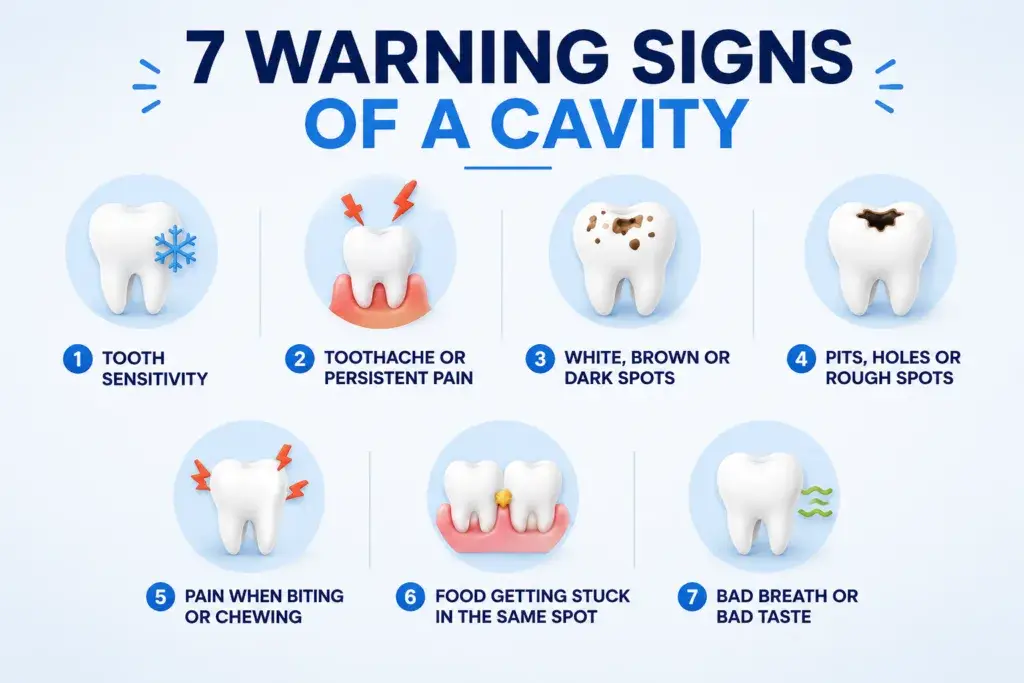
1. Tooth Sensitivity
- Tooth sensitivity can be one of the signs that something is affecting a tooth.
- You may notice a sharp or uncomfortable sensation when drinking something cold, having a hot drink or eating sweet foods. Sensitivity can have several causes, including tooth decay, worn enamel and gum-related problems, so it does not automatically mean you have a cavity.
- If sensitivity keeps occurring in the same tooth, it is worth having it checked by a dentist.
2. Toothache or Persistent Tooth Pain
- A toothache can be another warning sign of tooth decay.
- The discomfort may be mild at first or become more noticeable over time. You may experience pain while eating, drinking or biting down, or notice discomfort that keeps returning.
- Toothache can have many causes, including decay, a cracked tooth, gum problems or dental infection. If the pain persists or keeps coming back, a dental examination can help identify the cause.
3. White, Brown or Dark Changes on a Tooth
- A change in the colour of a tooth can sometimes indicate tooth decay.
- Early decay may appear as a white or chalky area. As tooth decay progresses, the affected area may become yellow-brown, brown or black.
- However, not every mark or discolouration is a cavity. Tooth staining and other dental conditions can also change the appearance of your teeth.
- If you notice a new or changing area, have it assessed by a dental professional rather than trying to diagnose it yourself.
- If you’re unsure about these changes, read our guide to [what a cavity looks like] to learn more about the different visual signs of tooth decay.
4. Pits, Holes or Changes to the Tooth Surface
- A cavity is a hole or damaged area that develops as tooth decay progresses.
- You may notice a small pit, rough patch or visible hole in the tooth. Cavities can also develop in areas that are difficult to inspect, including between teeth or within the grooves of back teeth.
- If you notice a new hole or unusual change to the surface of a tooth, arrange a dental assessment.
5. Pain When Biting or Chewing
- Pain or discomfort when biting down can be a sign that a tooth needs attention.
- You may notice that one particular tooth hurts when chewing food, even though it feels normal at other times.
- Tooth decay is one possible cause, but pain when biting can also occur with other dental problems, such as a cracked tooth. A dentist can determine the underlying cause during an examination.
6. Food Repeatedly Getting Stuck Around the Same Tooth
- Do you keep finding food stuck in exactly the same place?
- Repeatedly trapping food around one tooth can sometimes occur when the tooth’s shape or surface has changed. A cavity, damaged filling or another dental issue may create an area where food and plaque can accumulate more easily.
- If this happens regularly, particularly around the same tooth, mention it to your dentist.
7. Persistent Bad Breath or a Bad Taste
- Persistent bad breath or an unpleasant taste can have several causes, including dental problems such as tooth decay or gum disease.
- However, bad breath on its own does not confirm that you have a cavity. If it continues despite good oral hygiene, or occurs alongside tooth pain, sensitivity or other changes, speak with a dental professional.
Can You Have a Cavity Without Any Symptoms?
Yes. Early tooth decay may have no noticeable symptoms. This means you can have developing tooth decay even when your teeth feel completely normal.
Cavities can also develop in areas that are difficult to see, such as between teeth or in deep grooves on the chewing surfaces of back teeth.
This is one reason regular dental check-ups are important. Your dentist can examine areas that are difficult to assess at home and may recommend X-rays when appropriate.
How Do You Know If You Have a Cavity?
Possible signs of a cavity include:
- Tooth sensitivity
- Toothache or recurring tooth pain
- Pain when biting or chewing
- White, brown or dark changes on a tooth
- A pit, hole or rough area
- Food repeatedly getting stuck around the same tooth
- Other unusual changes to a tooth
However, symptoms alone cannot confirm that you have a cavity.
Your dentist can examine the tooth and, when necessary, use dental X-rays or other diagnostic methods to identify tooth decay that may not be visible.
How to Spot a Cavity Early
Pay attention to small changes in your teeth, including:
- A new area of sensitivity
- A white or chalky spot
- A change in tooth colour
- Food repeatedly becoming trapped around one tooth
- A rough or uneven tooth surface
- Discomfort when chewing
- Tooth pain that keeps returning
Not every change means you have a cavity, but unusual or persistent changes are worth getting checked.
Early tooth decay may be easier to manage before a cavity or hole develops. Healthdirect notes that treatment of early tooth decay can help stop it progressing.
What Causes Cavities?
Tooth decay develops when bacteria in plaque produce acids that gradually damage tooth enamel. Frequent exposure to sugary foods and drinks can increase the risk of tooth decay.
Your risk can also be affected by factors such as oral hygiene, dry mouth, diet and how frequently your teeth are exposed to sugar.
Brushing with fluoride toothpaste, cleaning between your teeth and having regular dental check-ups can help reduce the risk.
How Are Cavities Treated?
Treatment depends on how far tooth decay has progressed.
If decay is detected before a hole has formed, a dental professional may recommend preventive measures such as fluoride treatment and improvements to oral hygiene and diet.
If a cavity has formed, a dental filling may be needed to restore the damaged tooth. More extensive decay may require additional restorative treatment.
Your dentist will recommend the most appropriate option after examining the tooth.
Can a Cavity Go Away on Its Own?
A formed cavity does not simply disappear on its own.
However, very early tooth decay before a physical cavity has formed may sometimes be stopped or reversed with appropriate preventive care. Treatment can include fluoride and improvements to oral hygiene and diet.
Once a hole has formed, professional dental treatment may be required.
When Should You See a Dentist?
Arrange a dental appointment if you notice:
- Persistent tooth pain
- Repeated tooth sensitivity
- A new white, brown or dark spot
- A visible pit or hole
- Pain when biting or chewing
- Food repeatedly getting trapped around one tooth
- A tooth that looks or feels different
- Any other oral-health change that concerns you
You don’t need to wait until the pain becomes severe. Regular dental check-ups can also help identify tooth decay before it causes noticeable symptoms.
If you have toothache accompanied by facial swelling, fever, difficulty swallowing or other signs of a significant infection, seek prompt dental care.
How Can You Prevent Cavities?
You can help reduce your risk of cavities by:
- Brushing your teeth twice a day with fluoride toothpaste
- Cleaning between your teeth every day with floss or interdental brushes
- Limiting sugary foods and drinks
- Avoiding frequent sugary snacks and drinks
- Drinking water regularly
- Having regular dental check-ups
- Following your dentist’s personalised oral-health advice
Australian health guidance recommends brushing twice daily with fluoride toothpaste, cleaning between the teeth daily, limiting added sugar and having regular dental check-ups.
Protect Your Smile with Early Dental Care
Cavities don’t always announce themselves with severe toothache. Sometimes the first sign is a small change in sensitivity, a new mark on the tooth or discomfort when chewing. In other cases, there may be no noticeable symptoms at all.
If you’ve noticed something unusual, don’t ignore it.
Richmond & Springvale Dental Group provides dental care in Abbotsford and Springvale to help identify and manage dental problems. Book an appointment for a professional assessment of your teeth and oral health.