Quick Answer: A swollen gum around a wisdom tooth is most commonly caused by pericoronitis — a condition where bacteria and food get trapped under the gum flap around a partially erupted tooth. Mild cases improve with warm saltwater rinses and good oral hygiene. However, if swelling is severe, keeps returning, or is accompanied by fever or difficulty swallowing, you need dental treatment promptly — and in many cases, wisdom tooth removal is the most effective long-term solution.
Why Does the Gum Around a Wisdom Tooth Swell?
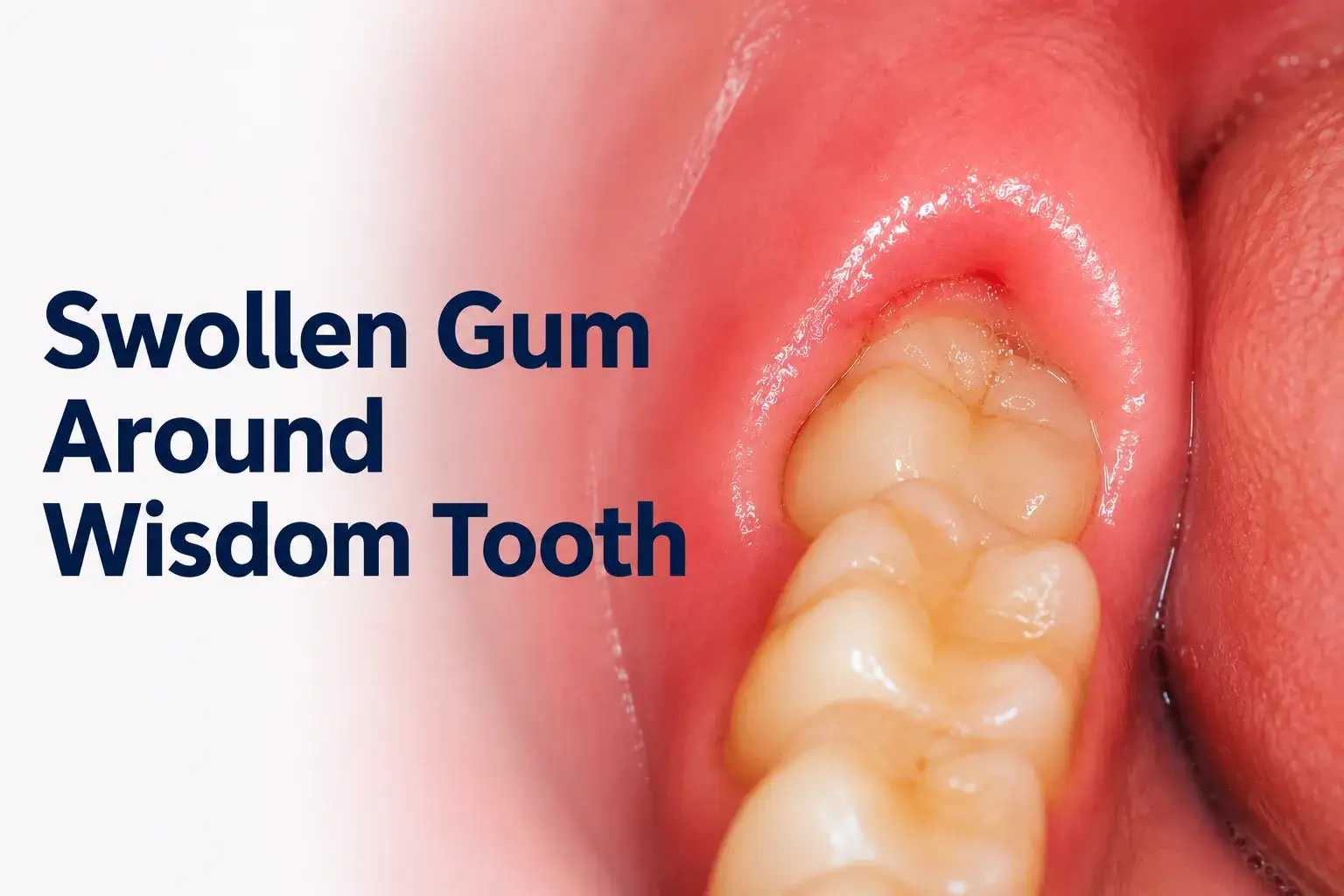
The most common cause is pericoronitis — inflammation of the gum tissue surrounding a partially erupted wisdom tooth. When a wisdom tooth hasn’t fully broken through the gumline, it creates a flap of gum tissue that traps food debris and bacteria underneath. This buildup causes the surrounding tissue to become infected and inflamed.
Pericoronitis usually affects the lower wisdom teeth and typically affects people in their late teens to twenties. A flap of gum called an operculum may cover part of the tooth, causing food and bacteria to get stuck — leading to swelling and pain.
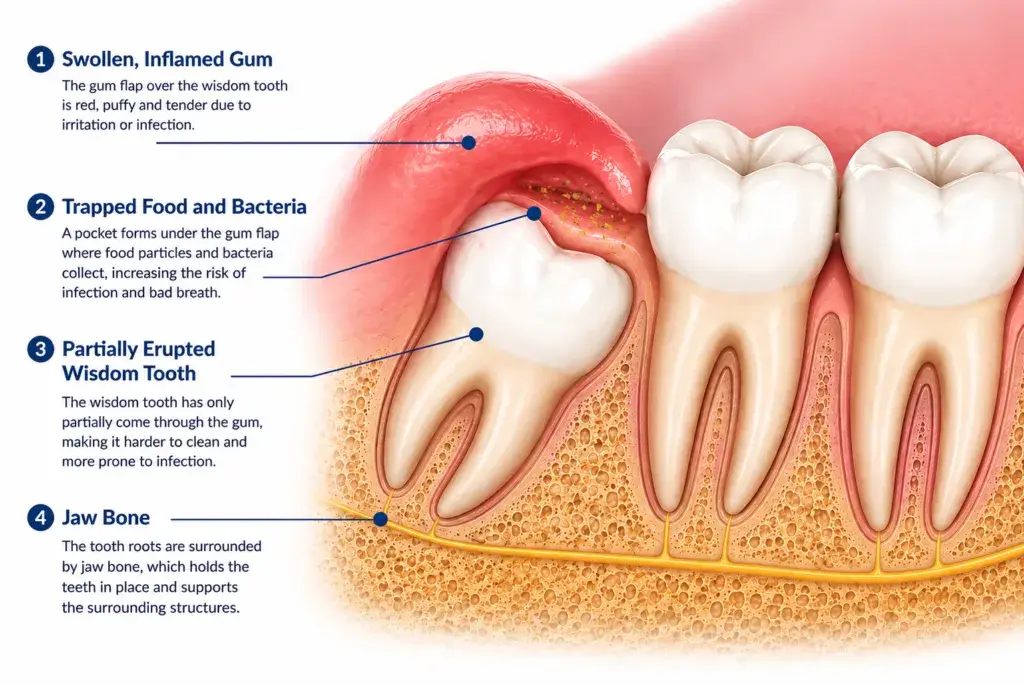
Other causes of swelling around a wisdom tooth include:
- Impacted wisdom teeth — a tooth that cannot fully erupt due to lack of space pushes against the gum and neighbouring teeth, causing chronic pressure and inflammation
- Food trapped under the gum flap — even without infection, debris causes irritation and swelling
- Poor cleaning access — the back of the mouth is difficult to clean thoroughly, allowing plaque to accumulate
- Tooth decay near the wisdom tooth — decay in the wisdom tooth or the adjacent molar can cause localised swelling
- Gum disease — existing periodontal disease makes wisdom tooth gum tissue more susceptible to infection
What Does a Swollen Gum Around a Wisdom Tooth Feel Like?
Symptoms vary in severity but commonly include:
- Throbbing or aching pain in the back of the mouth
- Red, puffy, or tender gum tissue around the affected tooth
- Difficulty chewing or opening the mouth fully
- Swelling extending to the jaw or cheek
- Bad taste or persistent bad breath
- Bleeding when brushing near the area
- Pus or discharge around the tooth
- Pain that radiates to the ear, jaw, or throat
In more serious cases, the infection may spread and cause facial swelling, pus, and fever — symptoms that require prompt dental care.
Can a Swollen Gum Around a Wisdom Tooth Go Away on Its Own?
Mild swelling can improve within a few days if the area is kept scrupulously clean and there is no active infection. However, because the underlying cause — a partially erupted tooth with a gum flap — does not change, pericoronitis almost always returns.
If the gum at the back of the mouth feels swollen, tender, or infected, or if there is a bad taste, bad breath, pus, jaw stiffness, or a wisdom tooth flare-up that keeps coming back, this may indicate pericoronitis — and it is important to get it checked promptly.
If symptoms last more than two days, worsen, or keep recurring, see a dentist. Home care manages the discomfort — it does not fix the structural problem.
5 Home Remedies to Relieve Wisdom Tooth Gum Pain
These remedies provide genuine short-term relief while you arrange a dental appointment. They do not treat an active infection or prevent the problem from returning.
- Warm saltwater rinse The most effective home option. Mix half a teaspoon of salt in a glass of warm water and rinse gently for 30 seconds after every meal and before bed. Salt reduces bacterial load, draws fluid from swollen tissue, and soothes irritated gum. Repeat 3–4 times daily.
- Cold compress on the cheek Apply an ice pack wrapped in a cloth to the outside of your cheek for 10–15 minutes at a time. Cold constricts blood vessels, reduces inflammatory swelling, and numbs surface pain quickly. Most effective in the first 24–48 hours of a flare-up.
- Over-the-counter anti-inflammatories Ibuprofen (taken as directed on the packet) reduces both pain and gum inflammation simultaneously. More effective for wisdom tooth gum pain than paracetamol, which addresses pain but not swelling. Do not exceed recommended doses or use if contraindicated for you.
- Keep the area clean Continue brushing carefully around the wisdom tooth using a soft-bristled toothbrush. Stopping brushing because it hurts allows more bacteria to accumulate, worsening the infection. An antibacterial mouthwash (alcohol-free) used after brushing can reduce the bacterial load further.
- Avoid irritating foods Hard, crunchy, or spicy foods aggravate inflamed gum tissue and can push debris further under the gum flap. Stick to soft foods — yoghurt, mashed potato, soup, and scrambled eggs — until the acute pain settles.
These measures ease discomfort but do not eliminate an established infection. If symptoms do not improve within 48 hours, contact your dentist.
Experiencing severe wisdom tooth pain in Melbourne? RS Dental offers same-day appointments at our Springvale (03 9558 5756) and Abbotsford (03 9428 9102) clinics. Book online here →
When Should You See a Dentist for Wisdom Tooth Gum Swelling?
Seek urgent dental care if you experience any of the following:
- Severe or rapidly worsening pain
- Pus or discharge near the tooth
- Fever or chills
- Difficulty swallowing or breathing
- Swelling spreading to the face or jaw
- Trouble opening your mouth fully
- Persistent bad breath that doesn’t improve with rinsing
- Recurring infections in the same area
These symptoms indicate the infection may be spreading beyond the gum tissue and require prompt professional treatment — not home management. If you experience fever alongside facial swelling, seek urgent care the same day.
RS Dental’s Springvale and Abbotsford clinics offer same-day appointments for urgent wisdom tooth concerns. Book here →
How Dentists Treat a Swollen Gum Around a Wisdom Tooth
Treatment depends on the severity of the infection and the position of the wisdom tooth. Your dentist will assess the area — usually with an X-ray — before recommending a path forward.
Professional Cleaning (Debridement) For mild pericoronitis without active spreading infection, the dentist cleans thoroughly beneath the gum flap to remove trapped bacteria and debris. This combined with antibacterial irrigation often resolves the acute episode. However, if the tooth remains partially erupted, the problem is likely to return.
Antibiotics If a bacterial infection has established, antibiotics are prescribed to control it before any further treatment. Amoxicillin or metronidazole are commonly used. Antibiotics resolve the infection — they do not prevent it from recurring if the underlying tooth position remains unchanged.
Operculectomy In some cases where the wisdom tooth is otherwise well-positioned, the dentist may surgically remove the gum flap (operculum) to eliminate the pocket where bacteria accumulate. This is a minor procedure and is less common than extraction.
Wisdom Tooth Removal For many patients, wisdom tooth removal is the most effective long-term treatment — some people only require monitoring, while others need surgery to remove the gum flap or the tooth itself. Removal usually stops pericoronitis from coming back.
Do All Swollen Gums Around Wisdom Teeth Need Extraction?
Not always. If the wisdom tooth is erupting normally, has enough space, and the gum inflammation is mild and non-recurring, cleaning and monitoring may be sufficient.
However, wisdom tooth removal is typically recommended when:
- Pericoronitis keeps recurring (two or more episodes)
- The tooth is impacted or partially impacted
- The wisdom tooth is damaging the adjacent molar
- Food trapping is constant due to the tooth’s position
- The tooth is causing ongoing pain or crowding
Dental X-rays — including a panoramic OPG — are essential to assess the tooth’s position, root shape, and proximity to the nerve before making any extraction decision. RS Dental carries out this imaging at both clinics as part of the assessment process.
How Much Does Wisdom Tooth Removal Cost in Melbourne?
Cost is one of the most common concerns patients have when considering wisdom tooth removal. At RS Dental, “We give you a written, itemised treatment estimate before you start, so you know the expected cost upfront.”
General Melbourne price ranges:
| Procedure | Approx. cost (AUD) |
|---|---|
| Simple wisdom tooth extraction (per tooth) | $200 – $700 |
| Surgical extraction — impacted tooth (per tooth) | $300 – $1,000 |
| Panoramic X-ray (OPG) | $100 – $150 |
| Initial consultation | $75 – $200 |
| All four wisdom teeth (simple) | $800 – $2,800 |
Most private health funds cover 50–80% of wisdom tooth removal costs under major dental cover, subject to your annual limit. RS Dental is a preferred provider with Medibank, Bupa, HCF, and NIB.
For a full cost breakdown including anaesthesia options and payment plans, read our wisdom teeth removal cost guide →
Can Pericoronitis Come Back After Treatment?
Yes — and this is the key reason why extraction is often the definitive recommendation. Pericoronitis can return if the wisdom tooth remains partially erupted and continues to trap food and bacteria under the gum flap. Clearing an infection with antibiotics and cleaning resolves the episode; it does not change the anatomy that caused it.
For many patients, wisdom tooth removal is the most practical solution to ending recurring infections permanently. Your dentist will discuss the long-term options at your assessment so you can make an informed decision rather than managing repeated flare-ups.
Why You Shouldn’t Ignore Wisdom Tooth Swelling
What begins as mild gum irritation can progress quickly if left untreated. The risks of ignoring a swollen gum around a wisdom tooth include:
- Spreading infection to the jaw, neck, or throat (Ludwig’s angina — rare but serious)
- Damage to the adjacent second molar from pressure or decay
- Development of a dental abscess requiring emergency treatment
- Advancing gum disease around the wisdom tooth and surrounding teeth
- Increasingly complex and costly extraction as the infection and impaction worsen
Early treatment is always simpler, faster, and less expensive than emergency treatment.
Can Wisdom Tooth Gum Swelling Be Prevented?
While not all wisdom tooth problems are preventable — tooth position is largely genetic — good oral hygiene significantly reduces the risk of infection and delays or prevents flare-ups.
Helpful habits include:
- Brushing twice daily, including carefully around the wisdom tooth area
- Flossing or using an interdental brush around all back teeth
- Rinsing with an alcohol-free antibacterial mouthwash
- Attending regular dental check-ups so wisdom tooth position is monitored
- Treating early symptoms promptly rather than waiting for the infection to worsen
If your dentist has flagged a partially erupted wisdom tooth at a routine check-up, ask specifically whether monitoring, cleaning, or preventive extraction is the recommended approach for your situation.
Richmond & Springvale Dental Group operates two Melbourne clinics — Abbotsford and Springvale. Open Monday–Friday 9 am–6:30 pm, Saturday 8 am–6:30 pm, Sunday 8 am–2 pm. Same-day appointments available for urgent wisdom tooth concerns.