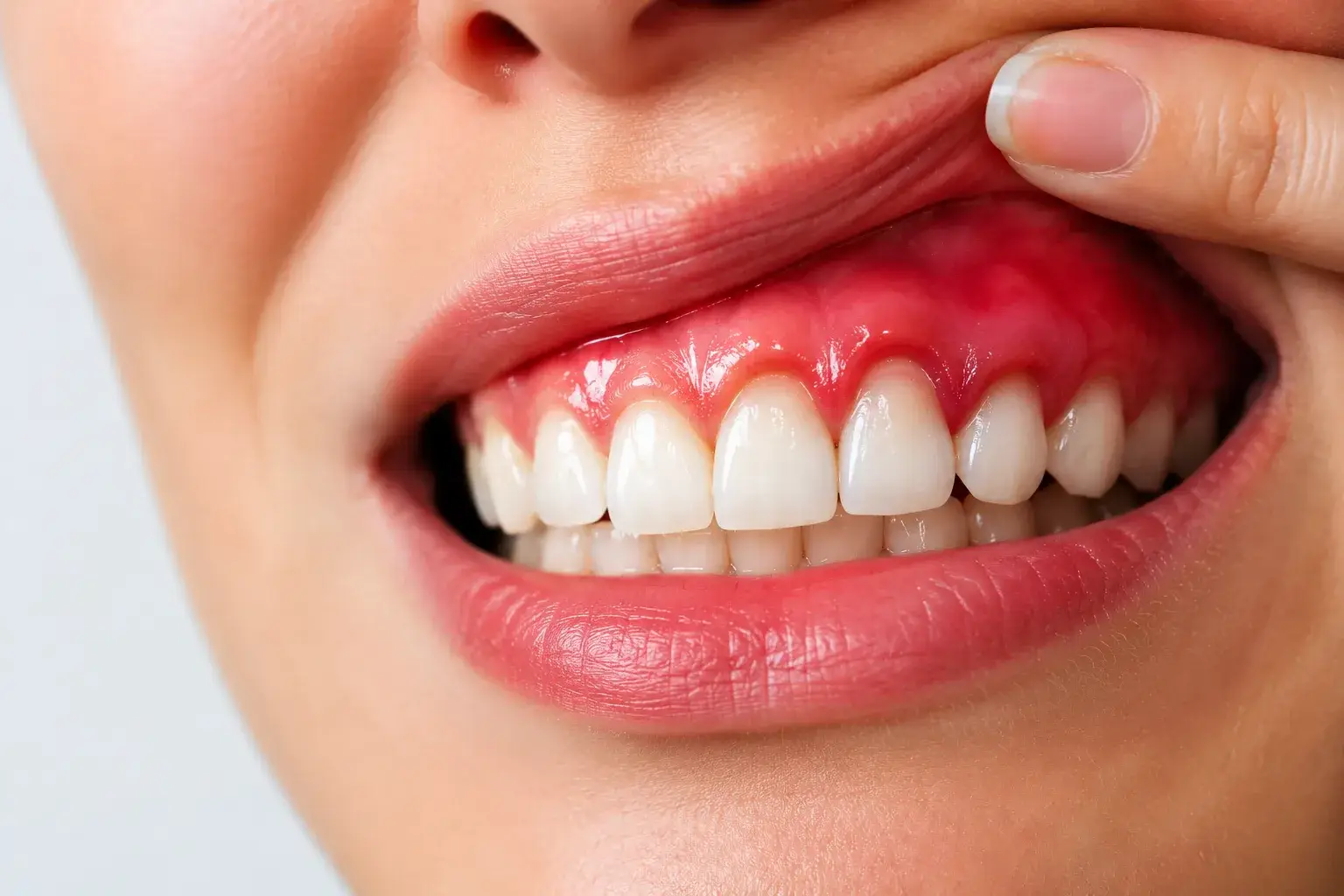
Swollen gums are most often caused by gum disease, but infections, hormonal shifts, vitamin deficiencies, and certain medications can all be responsible. For fast relief, start with warm saltwater rinses and an over-the-counter anti-inflammatory. However, swelling that lasts beyond two weeks always needs professional treatment — such as deep cleaning or antibiotics — to address the underlying cause.
What Are Swollen Gums?
Healthy gums are firm and pale pink. When they swell, they can look reddish or purplish, feel sore to the touch, bleed when brushing, or sit higher or lower on the tooth than usual.
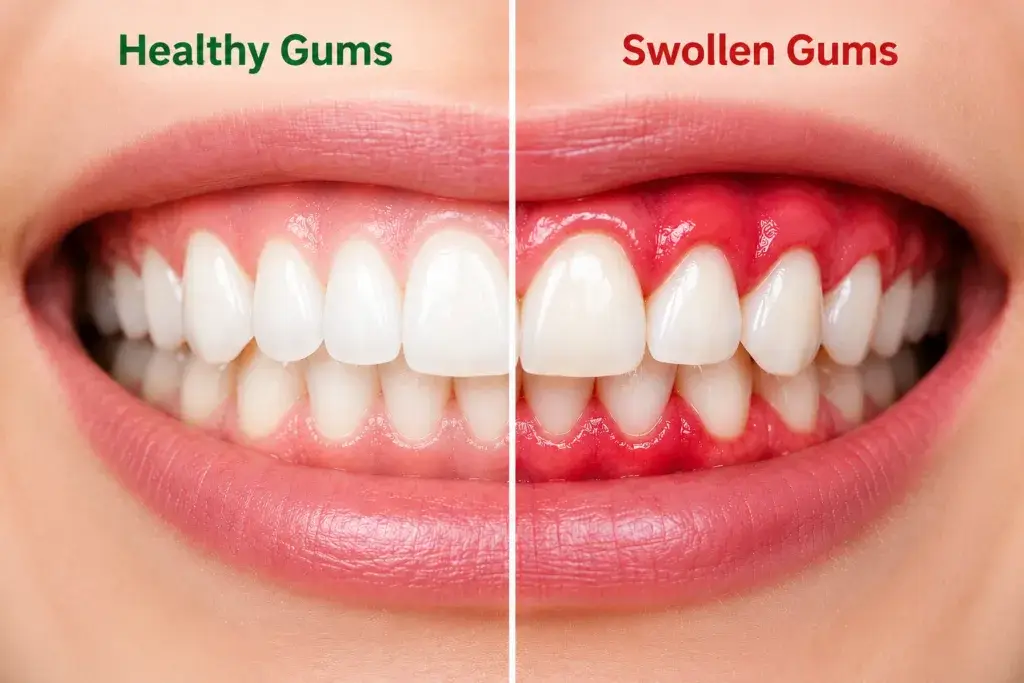
Gum disease is very common in Australia, with 3 in every 10 adults having moderate to severe gum disease — making swollen gums one of the most frequent concerns we see at RS Dental’s Springvale and Abbotsford clinics.
The good news is that when caught early, most causes are highly treatable.
Mild swelling sometimes settles on its own with good hygiene. But swelling that lingers beyond two weeks, keeps coming back, or gets worse always warrants a dental check.
What Causes Swollen Gums?
There is rarely one universal reason for swollen gums. Here are the most common causes:
- Gum Disease (Gingivitis) The number one reason. Plaque hardens into tartar along the gumline, causing bacterial inflammation that leads to swelling, redness, and bleeding. Gingivitis is reversible when caught early — but left untreated, it progresses to periodontitis, which can cause permanent bone loss.
- Dental Infections and Abscesses A pocket of pus near a tooth root, or a cracked tooth, lets bacteria in — causing localised and painful swelling that worsens quickly. Abscesses will not resolve without professional treatment.
- Hormonal Changes Oestrogen and progesterone fluctuations during pregnancy, puberty, and menopause increase blood flow to gum tissue, making it more reactive to bacteria. Swollen gums during pregnancy are very common and should be monitored at routine dental visits.
- Medications Certain blood pressure, seizure, and immunosuppressant drugs can cause gum overgrowth as a side effect. If you’ve recently started a new medication and noticed gum changes, mention this to your dentist.
- Nutritional Deficiencies Low levels of Vitamin C and Vitamin B weaken gum tissue over time, making it prone to swelling and spontaneous bleeding. A blood test from your GP or dentist can identify whether a deficiency is contributing.
- Medical Conditions Diabetes, oral thrush, herpes infections, and immune disorders can all show up as chronic or recurrent gum inflammation. Managing blood sugar in patients with diabetes, for example, can significantly reduce gum inflammation.
Also worth knowing: ill-fitting dentures, plaque around braces, and food debris trapped near the gumline can all trigger localised swelling.
Symptoms to Watch For
Swelling is just one sign. The full picture often includes a cluster of changes that, taken together, point toward the likely cause and urgency.
| Symptom | What It May Indicate |
|---|---|
| Bleeding when brushing or flossing | Gingivitis or early periodontitis |
| Redness or purple discolouration | Active inflammation or infection |
| Persistent bad breath | Bacterial overgrowth under the gumline |
| Gums pulling away from teeth | Advancing gum disease (periodontitis) |
| Visible pus or raised lumps | Dental abscess |
| Pain when eating or chewing | Localised infection or nerve involvement |
| Loose or shifting teeth | Significant bone loss from advanced disease |
Swollen Gums on One Side — What Does It Mean?
Swollen gums on one side almost always have a specific, localised cause rather than generalised gum disease.
The usual suspects include a dental abscess, a cracked tooth, trapped food debris, a gum cyst, or post-procedure inflammation.
See a dentist within 24–48 hours if the swelling is paired with a visible lump, throbbing pain, or a bad taste in your mouth. These are signs of an abscess that will not resolve without treatment.
Swollen Gum Around Wisdom Tooth
A partially erupted wisdom tooth can trap food and bacteria under the gum, causing localised swelling, pain, and tenderness. This condition is called pericoronitis and is one of the most common complaints in adults aged 17–25.
If the wisdom tooth is impacted or repeatedly inflamed, your dentist may recommend removal. Seek a same-day appointment if the swelling spreads, you develop a fever, or you have difficulty swallowing.
For a detailed guide on this specific situation, read our article on swollen gum around wisdom tooth: causes, relief and when to see a dentist.
How to Get Rid of Swollen Gums
Relief from swollen gums depends on what’s causing them. The approach has two parts: what you can do at home right now, and what a dentist needs to do for lasting resolution.
8 Home Remedies for Swollen Gums That Actually Help
These remedies will not replace professional care for serious cases, but they genuinely ease discomfort and support healing in the meantime:
- Warm saltwater rinse The most effective home remedy. Mix half a teaspoon of salt in a glass of warm water and rinse gently for 30 seconds, two to three times daily. Salt reduces bacterial load and draws fluid out of swollen tissue.
- Cold compress on the cheek Apply a cold pack wrapped in a cloth to the outside of your cheek for 10–15 minutes. Reduces inflammation and numbs discomfort quickly.
- Over-the-counter anti-inflammatories Ibuprofen (taken as directed) reduces both pain and gum inflammation. More effective for swollen gums than paracetamol, which only addresses pain.
- Soft-bristle brushing Continue brushing — stopping makes plaque build-up worse. Use a soft-bristle toothbrush and gentle circular strokes rather than scrubbing.
- Gentle flossing Floss carefully around the swollen area to remove any trapped food debris that may be contributing to localised swelling.
- Diluted hydrogen peroxide rinse Mix equal parts 3% hydrogen peroxide and water. Rinse for 30 seconds and spit. Reduces bacteria and can ease bleeding gums — do not swallow.
- Turmeric paste Mix a small amount of turmeric powder with water to form a paste. Apply to the gum for 5 minutes then rinse. Turmeric’s active compound (curcumin) has evidence-backed anti-inflammatory properties for oral tissue.
- Clove oil Apply a small amount to a cotton ball and hold against the swollen area for 1–2 minutes. Use sparingly — effective for localised pain relief but can irritate tissue if overused.
Avoid smoking, alcohol-based mouthwash, and hard or crunchy foods while gums are swollen — all three significantly delay healing.
Professional Treatment Options
Treatment is matched to the cause. Your dentist will assess what is driving the inflammation before recommending a path forward.
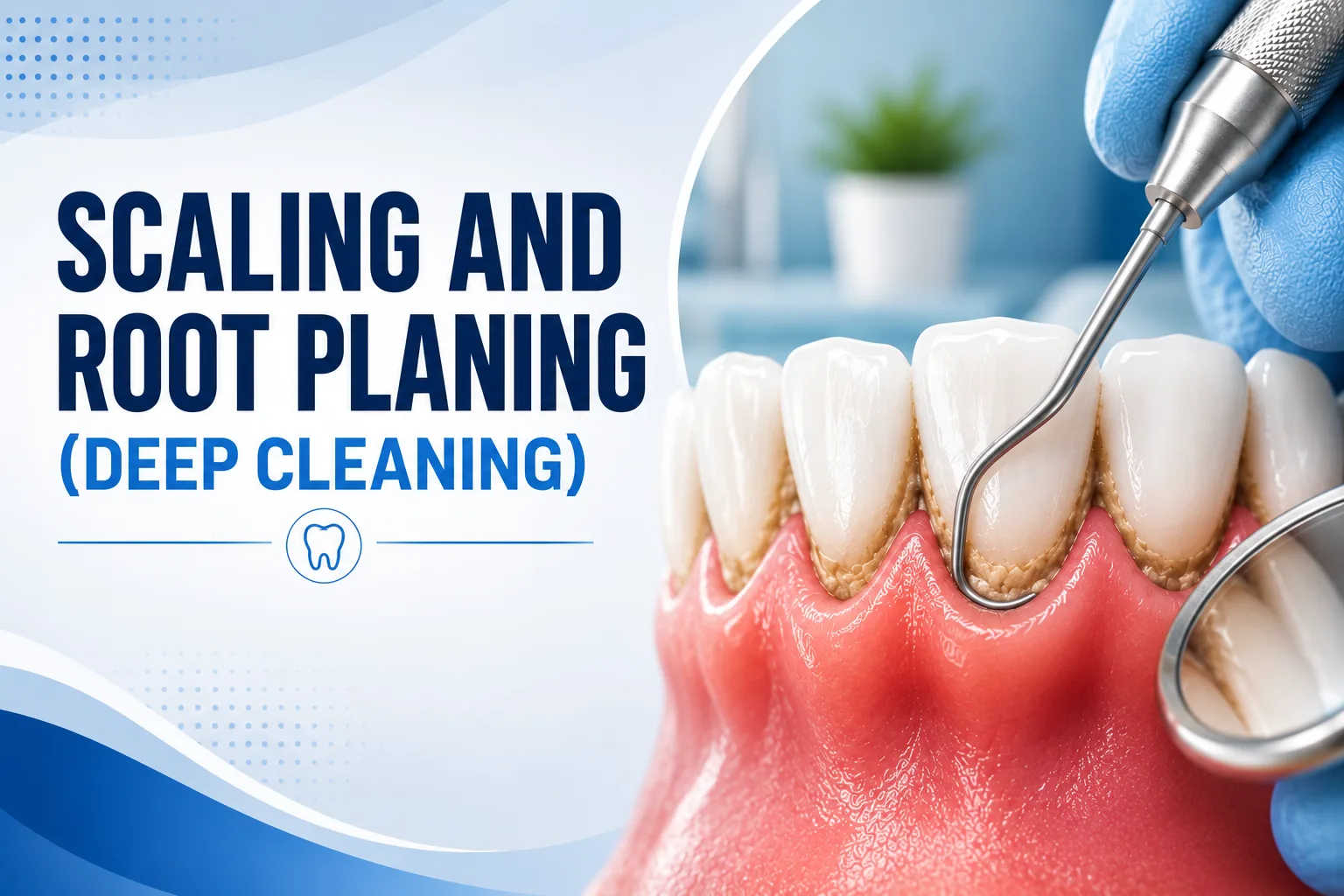
- Deep Cleaning (Scaling and Root Planing) Removes hardened tartar below the gumline. The go-to treatment for gum disease, with most Melbourne patients seeing clear improvement within 2–4 weeks. Available at both RS Dental clinics.
- Antibiotics Used when a bacterial infection is confirmed — applied directly into the gum pocket or taken orally depending on severity.
- Root Canal or Extraction Necessary when a tooth abscess or severe damage is the source of infection and the tooth cannot be saved with other treatment.
- Gum Surgery For advanced periodontitis that cannot be cleaned effectively through scaling alone. Minor surgery reshapes deep gum pockets to allow proper cleaning access.
- Managing Underlying Causes Controlling blood sugar in patients with diabetes, reviewing medications with a GP, or correcting nutritional deficiencies can significantly reduce gum inflammation without direct gum treatment.
When to See a Dentist
Seek dental care promptly if you experience any of the following:
- Swelling lasting more than two weeks
- Visible pus or a lump on the gum
- Pain spreading to the jaw or ear
- Fever alongside gum swelling
- Difficulty opening your mouth or swallowing
- Teeth that feel loose or have shifted
- Swelling that keeps returning despite good home hygiene
If any of these apply to you, don’t wait. RS Dental offers same-day appointments at our Springvale and Abbotsford clinics. Book online here or call us directly — Springvale (03 9558 5756) or Abbotsford (03 9428 9102).
Worried About Your Gums? We Can See You Today
Richmond & Springvale Dental Group offers same-day appointments across our Abbotsford and Springvale clinics in Melbourne. Whether it is routine monitoring or an urgent gum concern, our experienced team will assess the cause and recommend the most effective treatment — with a fixed-price plan so you know the cost upfront.
We are preferred providers with Medibank, Bupa, HCF, and NIB. Book your appointment today →