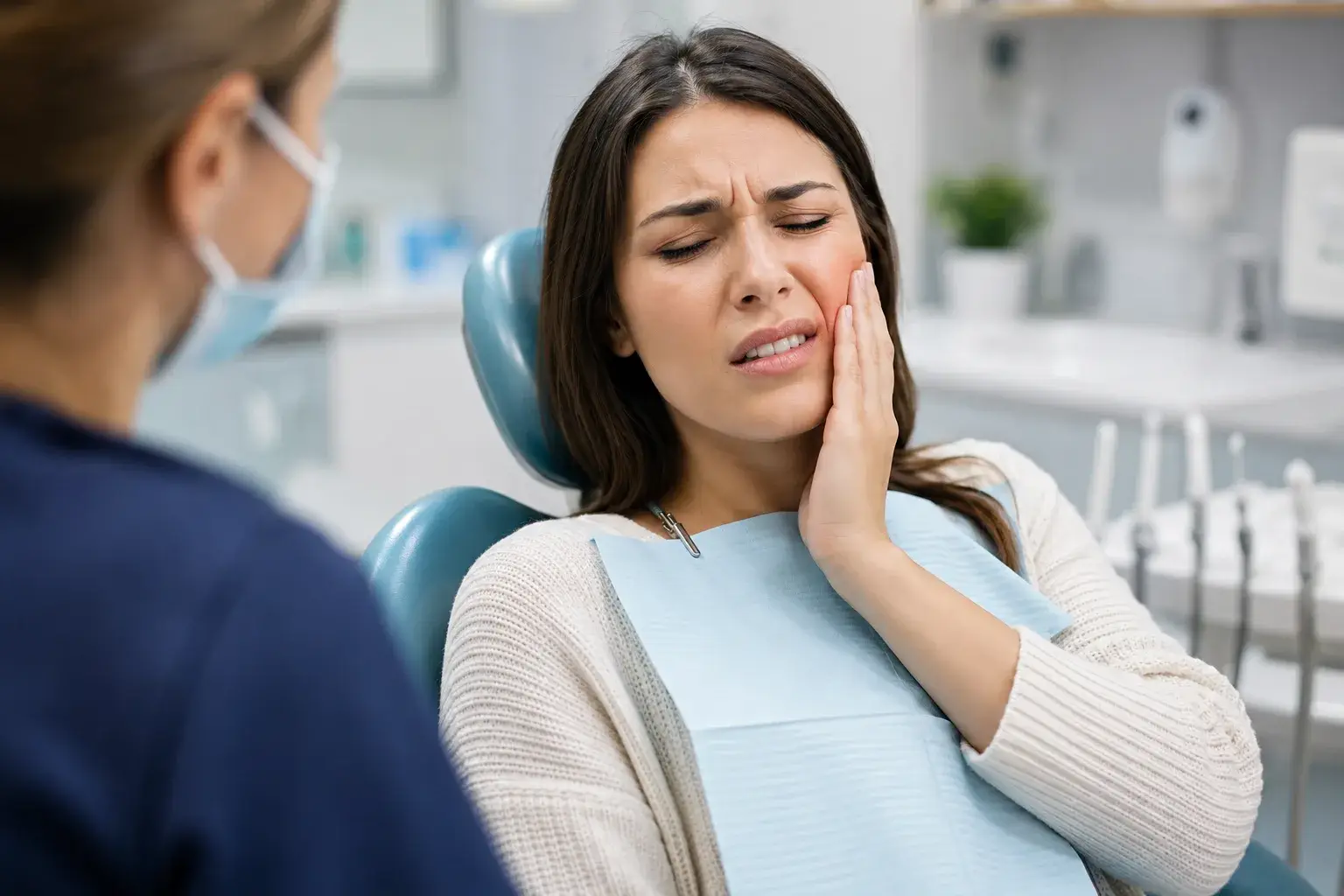
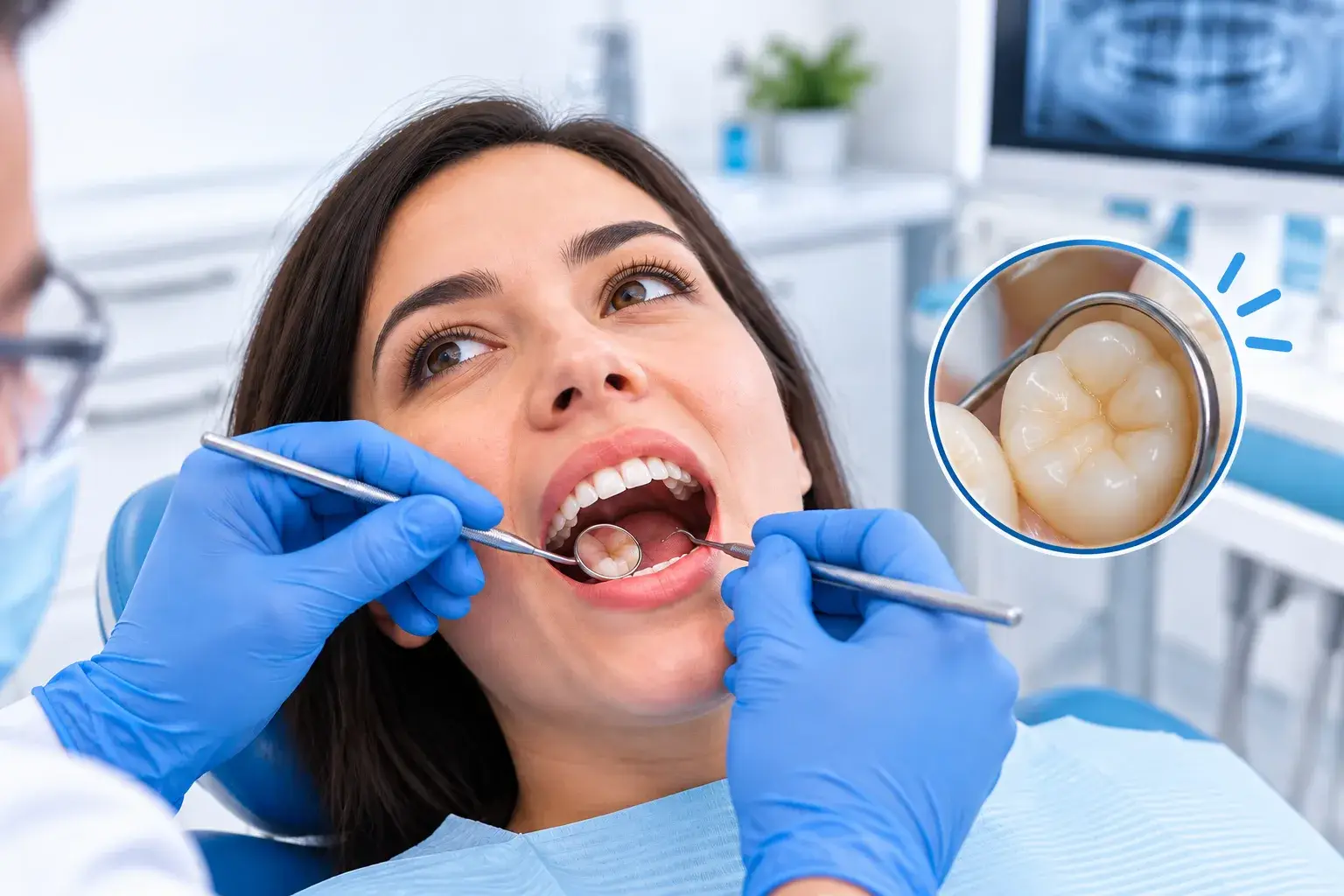
Does one tooth hurt when you bite down, chew food or put pressure on it? Tooth pain when biting is not something to ignore, especially if the pain happens repeatedly in the same tooth.
Pain triggered by biting may be linked to a cracked tooth, tooth decay, a damaged filling, an infection or irritation around the tooth’s supporting tissues. The cause is not always obvious, so a dentist may need to examine the tooth and take an X-ray.
This guide explains the common causes of tooth pain when biting, what the symptoms may mean and when to seek dental treatment.
What Does Tooth Pain When Biting Mean?
Tooth pain when biting usually means that pressure is irritating a tooth, its nerve or the tissues supporting it. You may notice pain when you:
- Bite down on hard or chewy food
- Chew on one side of your mouth
- Put pressure on a particular tooth
- Bite down and then release your bite
- Eat something crunchy
- Clench or grind your teeth
- Touch the tooth with your tongue or finger
The pain may feel sharp, sudden, dull or throbbing. It may also occur only when chewing, while the tooth feels comfortable when you are not eating.
Pain when biting is a symptom rather than a diagnosis. Several dental problems can cause it, and the correct treatment depends on the underlying cause.
Common Causes of Tooth Pain When Biting Down
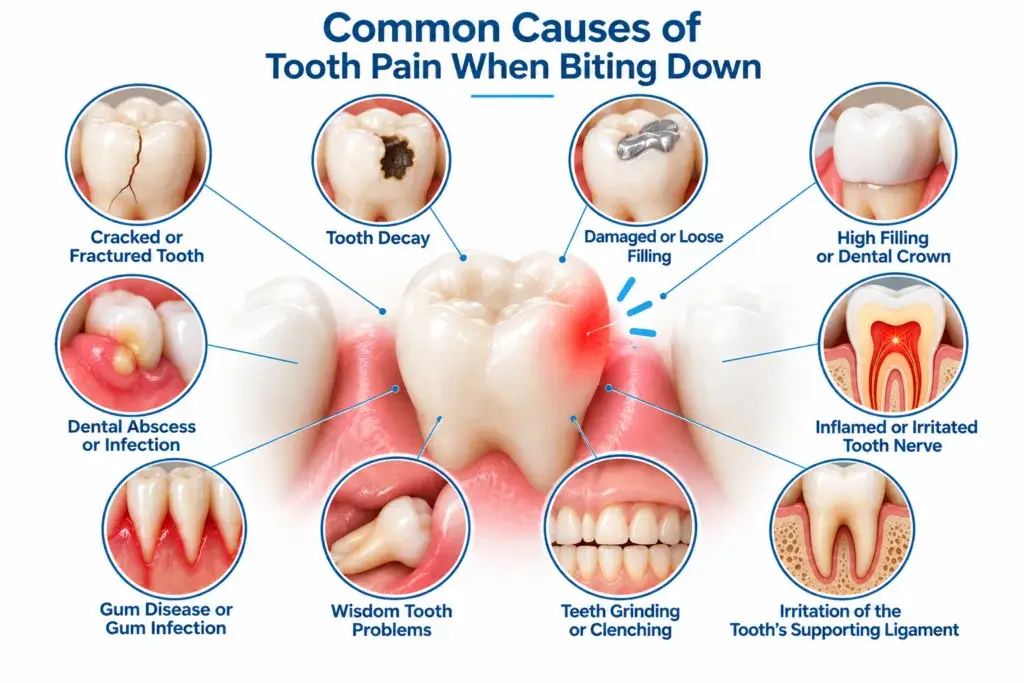
1. Cracked or Fractured Tooth
A cracked tooth is one possible cause of sharp pain when biting. A crack may allow pressure to affect the inner layers of the tooth or irritate the surrounding tissues.
You may notice:
- Sharp pain when biting on a particular tooth
- Pain when chewing hard foods
- Pain when releasing your bite
- Sensitivity to hot or cold
- Symptoms that come and go
- Difficulty identifying the exact tooth
Cracks are not always visible, even during a routine examination. Your dentist may use bite tests, magnification, dental lighting or X-rays to help identify the problem.
Treatment depends on the size and location of the crack. Options may include a filling, dental crown, root canal treatment or tooth removal when the tooth cannot be restored.
2. Tooth Decay
Tooth decay can weaken the tooth and eventually reach the dentine or pulp. When decay becomes deeper, biting pressure may cause pain.
Possible signs include:
- Pain when biting or chewing
- A visible hole or dark area in the tooth
- Food getting trapped between teeth
- Sensitivity to sweet, hot or cold foods
- Bad taste or unpleasant breath
- Increasing pain over time
Small cavities may be treated with a dental filling. If decay has reached the nerve, root canal treatment or another form of treatment may be required.
Read more about the warning signs of a cavity and the stages of tooth decay.
3. Damaged, Loose or Worn Dental Filling
A filling can become worn, cracked or loose over time. The tooth underneath may also develop new decay.
You may experience:
- Pain when biting on the filled tooth
- A sharp edge on the filling
- Food trapping around the filling
- Sensitivity to pressure
- A filling that feels higher than the surrounding teeth
- A change in the way your teeth meet
Your dentist may repair or replace the filling. If the tooth has cracked or the decay is extensive, a crown or root canal treatment may be recommended.
You can learn more about dental filling costs in Australia.
4. A High Filling or Dental Crown
Sometimes a tooth hurts when biting after a filling, crown or other dental treatment because the restoration is slightly higher than the surrounding teeth.
This can cause the tooth to receive too much pressure when you bite. The tooth may feel:
- Tender when biting down
- Sensitive when chewing
- More painful when eating hard food
- Uncomfortable when your teeth come together
If the restoration is too high, your dentist may be able to adjust it. Do not attempt to file or adjust a filling or crown yourself.
5. Dental Abscess or Tooth Infection
A dental abscess is a collection of pus caused by a bacterial infection. An infected tooth may become painful when biting because pressure affects the inflamed tissues around the tooth.
Other symptoms may include:
- Persistent tooth pain
- Pain when biting or chewing
- Swelling around the tooth or gum
- A pimple or lump on the gum
- Bad taste in the mouth
- Fever
- Facial swelling
- Increased sensitivity
- Difficulty opening the mouth
A dental abscess requires prompt professional treatment. Depending on the cause, treatment may involve drainage, root canal treatment, tooth removal or other dental care.
Read more about tooth abscess symptoms and treatment.
6. Inflamed or Irritated Tooth Nerve
The pulp is the soft inner part of the tooth containing nerves and blood vessels. Deep decay, trauma or cracks can irritate the pulp.
You may experience:
- Pain when biting
- Sensitivity to hot or cold
- Pain that continues after eating
- Spontaneous tooth pain
- Throbbing or intense discomfort
- Pain that becomes worse at night
If the pulp is severely inflamed or infected, root canal treatment may be required to remove the damaged tissue and preserve the tooth.
For more information, see our guide to tooth nerve pain.
7. Irritation of the Tooth’s Supporting Ligament
Each tooth is supported by a thin ligament that helps connect it to the surrounding bone. This ligament can become irritated when a tooth receives excessive pressure.
Possible causes include:
- Teeth grinding
- Clenching
- Biting something unusually hard
- A high filling or crown
- Trauma to the tooth
- Recent dental treatment
The tooth may feel bruised or tender when biting, even if there is no obvious cavity. Your dentist will need to check the tooth, your bite and the surrounding tissues.
8. Gum Disease or Infection Around the Tooth
Gum disease can cause inflammation around the tissues supporting a tooth. In advanced cases, the tooth may feel tender or uncomfortable when chewing.
Look for:
- Red or swollen gums
- Bleeding when brushing
- Gum tenderness
- Persistent bad breath
- Receding gums
- Loose teeth
- Pus around the gumline
- Pain when chewing
Gum-related pain may require professional cleaning, periodontal treatment or other care depending on the severity.
9. Wisdom Tooth Problems
A wisdom tooth may cause pain when chewing if it is partially erupted, impacted or surrounded by inflamed gum tissue.
You may notice:
- Pain at the back of the mouth
- Swelling around a wisdom tooth
- Difficulty chewing
- Food trapping around the tooth
- Bad taste or bad breath
- Jaw discomfort
- Gum tenderness
Wisdom tooth pain should be assessed by a dentist, particularly if swelling, fever or difficulty opening the mouth develops.
Read more about swollen gum around a wisdom tooth.
10. Teeth Grinding or Clenching
Grinding or clenching places extra pressure on the teeth and their supporting tissues. Over time, this may contribute to tooth tenderness, cracks, worn enamel or jaw discomfort.
You may notice:
- Pain when biting in the morning
- Several teeth feeling tender
- Headaches or jaw soreness
- Worn or flattened teeth
- Cracked fillings
- Increased sensitivity
- A partner noticing grinding sounds at night
Your dentist may recommend a custom night guard, bite assessment or other treatment based on the cause.
Why Does My Tooth Hurt When I Bite but Not When I’m Resting?
A tooth can hurt only when biting because pressure is activating an irritated area. This may happen with:
- A cracked tooth
- A high filling or crown
- A damaged filling
- Irritation of the tooth-supporting ligament
- Early infection
- Tooth decay
- Recent dental treatment
Pain that occurs only when chewing does not automatically mean the problem is minor. Some cracked teeth and dental infections cause symptoms mainly when pressure is applied.
If the same tooth repeatedly hurts when biting, arrange a dental examination rather than waiting for the pain to become constant.
Why Does My Back Tooth Hurt When Chewing?
Back teeth, including molars, handle much of the pressure involved in chewing. As a result, problems affecting a molar may become noticeable when eating hard or chewy foods.
Common causes include:
- Cracked molars
- Tooth decay
- A damaged filling
- A high crown
- Wisdom tooth problems
- Gum infection
- Teeth grinding
- Tooth abscess
Try to avoid chewing on the painful side until the tooth has been examined. Do not use the pain disappearing temporarily as proof that the problem has resolved.
Why Does My Tooth Hurt When I Bite Something Hard?
Hard foods can place concentrated pressure on a tooth. If the tooth has a crack, weakened filling, decay or irritated supporting tissues, this pressure may trigger pain.
Hard foods that may expose the problem include:
- Nuts
- Ice
- Hard lollies
- Popcorn kernels
- Crusty bread
- Hard biscuits
- Chewy meat
- Unpopped popcorn kernels
Avoid chewing hard foods on the painful side. If the pain continues, book an appointment with your dentist.
Why Does My Tooth Hurt When I Release My Bite?
Pain when you release your bite can sometimes occur with a cracked tooth. A crack may allow the tooth structure to move slightly under pressure, producing pain as the bite is released.
However, this symptom alone cannot confirm a crack. Other dental problems may cause similar discomfort, so a professional examination is important.
Tooth Pain When Biting vs Tooth Sensitivity
Tooth pain when biting and tooth sensitivity are not always the same problem.
| Symptom | Possible cause |
|---|---|
| Pain mainly when biting or chewing | Crack, decay, damaged filling or pressure-related irritation |
| Pain from cold drinks | Tooth sensitivity, decay or pulp irritation |
| Pain from hot drinks | Pulp inflammation, decay or infection |
| Pain that continues after hot or cold | Possible nerve inflammation |
| Constant throbbing pain | Possible advanced inflammation or infection |
| Pain with swelling or fever | Possible dental abscess |
| Pain after a new filling or crown | Possible high restoration or bite issue |
Some conditions can cause more than one symptom. For example, a cracked tooth may hurt when biting and also react to hot or cold.
How Is Tooth Pain When Biting Diagnosed?
Your dentist may use several methods to identify the cause, including:
Dental examination
Your dentist will check the painful tooth, surrounding gums, fillings, crowns and bite.
Bite testing
You may be asked to bite on a dental instrument or a small testing device. This helps identify whether pressure on a particular part of the tooth causes pain.
Dental X-rays
X-rays may help identify decay, infection, bone changes or other problems. However, not every crack is visible on a standard X-ray.
Checking your bite
Your dentist may check whether one tooth is receiving excessive pressure from a filling, crown, clenching or grinding.
Additional tests
Depending on the symptoms, your dentist may assess the tooth’s response to cold, heat or other tests to determine whether the nerve is healthy.
Treatment for Tooth Pain When Biting
Treatment depends on the cause. Possible options include:
- Dental filling for decay or minor damage
- Filling repair or replacement
- Bite adjustment for a high filling or crown
- Dental crown to protect a weakened tooth
- Root canal treatment for infected or severely inflamed pulp
- Professional gum treatment
- Wisdom tooth treatment or removal
- A custom night guard for grinding or clenching
- Tooth extraction if the tooth cannot be saved
Your dentist should explain the recommended treatment after assessing the tooth.
What Can You Do Until Your Dental Appointment?
While waiting for an appointment:
- Avoid chewing on the painful side
- Choose softer foods
- Avoid hard, crunchy or sticky foods
- Brush gently around the area
- Continue cleaning between your teeth carefully
- Rinse with warm salt water if the gums feel irritated
- Use an over-the-counter pain reliever only as directed on the label and if it is safe for you
- Do not place aspirin directly on the tooth or gum
- Do not try to repair, file or remove a filling or crown yourself
These steps may help manage discomfort temporarily, but they do not treat the underlying cause.
When Should You See a Dentist?
Book a dental appointment if:
- The same tooth hurts repeatedly when biting
- Pain continues for more than a short period
- You avoid chewing on one side
- You have a cracked or damaged filling
- You recently had a filling or crown placed
- You have sensitivity with biting pain
- Food regularly becomes trapped around one tooth
- You notice swelling, bleeding or gum tenderness
- The pain is getting worse
Seek urgent dental care if you have:
- Facial or jaw swelling
- Fever with tooth pain
- Pus or a bad taste
- Severe or rapidly worsening pain
- Difficulty opening your mouth
- Difficulty swallowing or breathing
- Swelling spreading towards the eye or neck
Difficulty breathing or swallowing with facial swelling can be a medical emergency. Seek emergency medical assistance immediately.
Book a Dental Examination
If your tooth hurts when biting, chewing or putting pressure on it, an examination can help identify the cause before the problem becomes more serious.
At Richmond & Springvale Dental Group, our dental team can assess tooth pain, check for cracks, decay, damaged restorations and infection, and recommend suitable treatment.
Contact RS Dental Group to arrange an appointment at our Abbotsford or Springvale dental clinic.