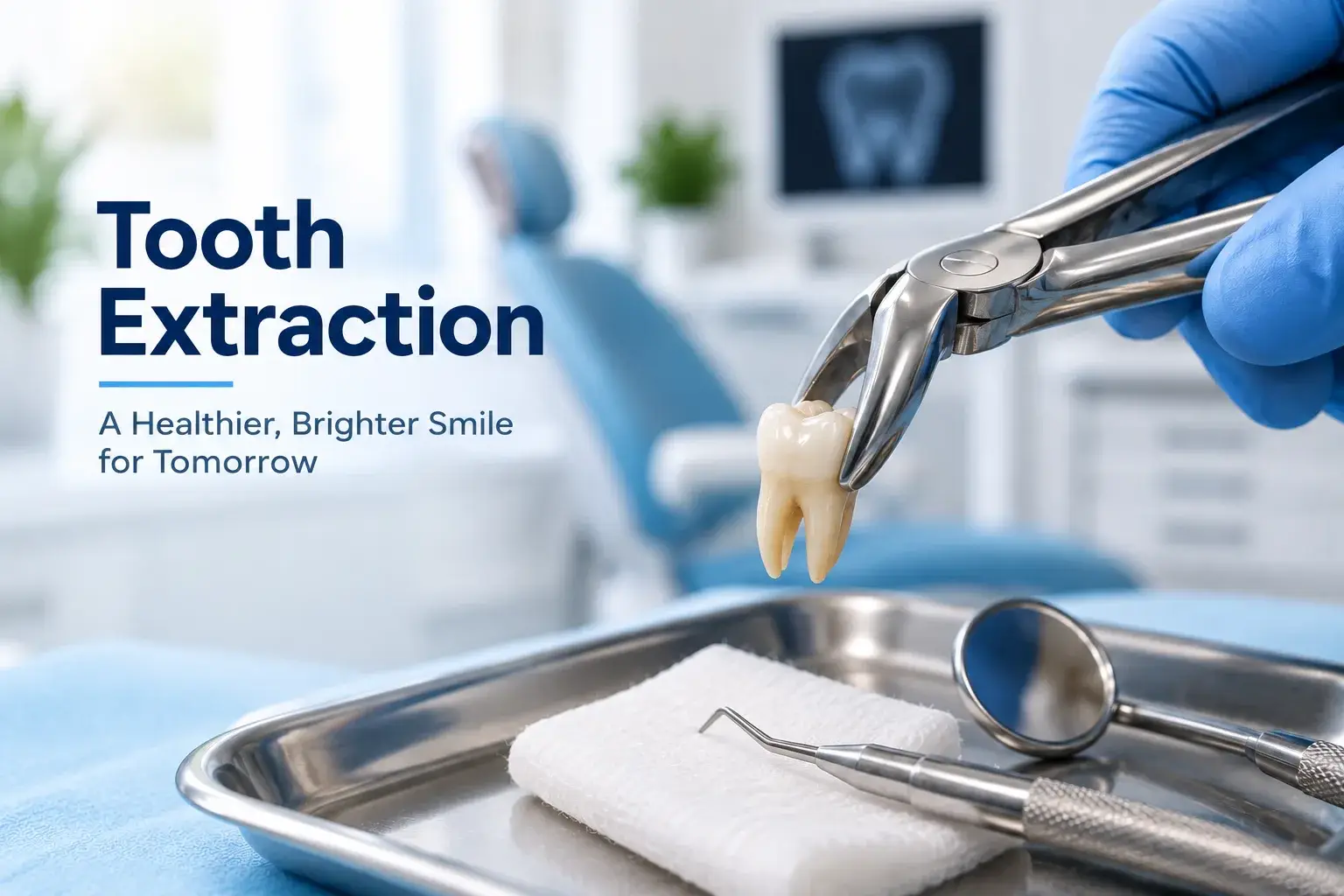
If you have been told that a tooth needs to be removed, one of your first questions is likely to be: how much does tooth extraction cost?
The answer depends on the type of extraction, the condition and position of the tooth, whether it is impacted, and whether additional treatment such as X-rays or sedation is required.
A straightforward extraction of a visible tooth is generally less complex than surgical removal of a broken, impacted or partially erupted tooth. This is why two patients can receive very different quotes for tooth removal.
At Richmond & Springvale Dental Group, our dentists assess your individual situation before recommending extraction and explain the expected treatment and costs before proceeding.
How Much Does Tooth Extraction Cost in Melbourne?
There is no single price for every tooth extraction.
As a general Melbourne guide, current published dental fees commonly place straightforward extractions in the lower hundreds of dollars, while surgical and impacted extractions can cost considerably more. For example, recent Melbourne dental pricing guides report simple extraction ranges around $200–$450, with surgical or more complex extractions often costing $400–$900 or more, depending on the circumstances.
| Type of extraction | Indicative Melbourne cost* |
|---|---|
| Simple tooth extraction | $200–$450+ |
| Complex tooth extraction | $350–$700+ |
| Surgical tooth extraction | $400–$900+ |
| Impacted wisdom tooth | $500–$1,000+ |
| Consultation | May be charged separately |
| Dental X-rays | May be charged separately |
*These figures are general market guidance, not a quotation from RS Dental Group. Your actual fee depends on your clinical circumstances, the required procedure and any additional services.
For an accurate tooth extraction cost at RS Dental Group, a dental assessment is required before treatment.
What Is a Tooth Extraction?
A tooth extraction is a dental procedure used to remove a tooth from its socket.
Dentists generally try to preserve natural teeth whenever they can. However, extraction may be recommended when a tooth cannot be predictably restored or when keeping it could compromise your oral health.
Common reasons include:
- Severe tooth decay
- Extensive tooth damage or fracture
- Advanced gum disease
- Dental infection
- An impacted tooth
- Overcrowding
- Some orthodontic treatment plans
- Problematic wisdom teeth
The appropriate treatment depends on your individual dental condition.
What Is the Difference Between Simple and Surgical Extraction?
The biggest factor affecting tooth extraction cost is often the complexity of removing the tooth.
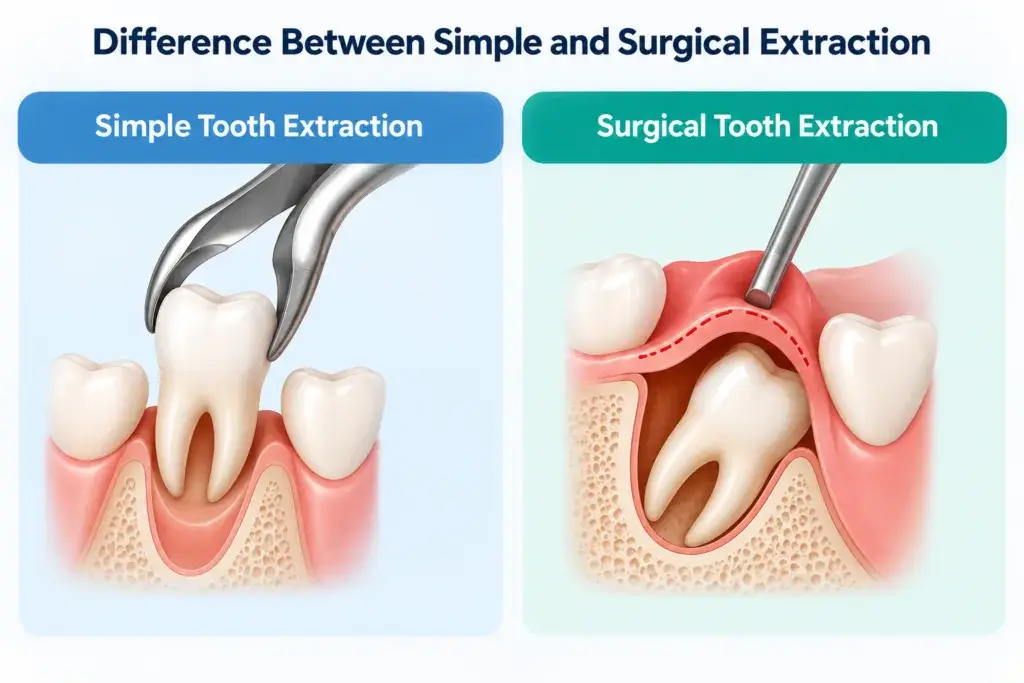
Simple tooth extraction
A simple extraction is generally performed when the tooth is visible above the gum and can be loosened and removed using dental instruments.
It may be recommended when a tooth is:
- Severely decayed but accessible
- Broken above the gum line
- Loose because of periodontal disease
- Otherwise unsuitable for restoration
Because the tooth is easier to access, a simple extraction is generally less complex than surgical removal.
Surgical tooth extraction
A surgical extraction may be necessary when the tooth cannot be removed easily with a straightforward extraction technique.
This can happen when a tooth:
- Is impacted
- Is partially covered by gum
- Has broken near or below the gum line
- Has complicated root anatomy
- Requires sectioning before removal
Surgical extraction can therefore involve additional time, equipment and clinical expertise, which can increase the overall cost.
What Factors Affect Tooth Extraction Cost?
The cost of removing a tooth isn’t determined simply by the tooth itself. Your dentist considers several factors before providing a treatment estimate.
1. Type of extraction
A simple extraction usually requires less complex treatment than a surgical extraction.
2. Position of the tooth
Teeth that are easy to access are generally simpler to remove. A tooth positioned beneath the gum or bone can require a surgical approach.
3. Condition of the tooth
A heavily broken or decayed tooth may be more difficult to remove than an intact tooth.
4. Root shape and position
Curved, unusually shaped or complicated roots can make extraction more challenging.
5. X-rays and diagnostic imaging
Your dentist may recommend dental X-rays before extraction to assess the tooth, roots, surrounding bone and nearby structures.
The type of imaging required depends on the tooth and the complexity of the procedure.
6. Anaesthesia or sedation
Local anaesthetic is commonly used to keep the treatment area numb.
For certain complex procedures or patients with specific needs, additional sedation options may be discussed. Any additional anaesthesia or sedation can affect the total treatment cost.
7. Wisdom teeth
Wisdom teeth can be more complicated to remove, particularly when they are impacted.
RS Dental Group already has a dedicated guide covering wisdom teeth removal costs, so this page should internally link to that resource rather than duplicating the entire topic.
Does Dental Insurance Cover Tooth Extraction?
If you have private health insurance with extras cover, your policy may provide a rebate for eligible dental procedures.
However, the amount you receive depends on:
- Your level of cover
- Your waiting periods
- Your annual benefit limit
- The specific dental item
- Your insurer’s rules
- Whether your dentist is a participating provider
Your insurance provider can confirm your individual rebate before treatment.
It’s also worth checking your remaining annual dental limit, particularly if you need other treatment after the extraction.
Does Medicare Cover Tooth Extraction?
For most adults receiving dental treatment in a private dental clinic, Medicare does not generally cover routine tooth extraction.
Some people may have access to publicly funded dental services depending on their eligibility and circumstances.
Children who meet the eligibility requirements may also be able to receive certain dental services through the Child Dental Benefits Schedule (CDBS).
If you are unsure whether you qualify for public dental assistance, check the current eligibility requirements applicable to you.
Is Tooth Extraction the Cheapest Option?
Extraction can have a lower upfront cost than some restorative treatments, but that doesn’t necessarily mean it is the most economical long-term option.
If a damaged tooth can be successfully restored, your dentist may discuss alternatives such as:
- Dental fillings
- Crowns
- Root canal treatment
- Other restorative procedures
Once a tooth has been removed, the space may also need to be considered.
Depending on your circumstances, replacement options can include:
- Dental implants
- Dental bridges
- Partial dentures
For example, RS Dental Group’s dental implant information explains that replacing a missing tooth can involve considerably more treatment than the original extraction.
The right decision should therefore be based on the health and prognosis of the tooth, not simply the initial extraction price.
What Happens During a Tooth Extraction?
Before removing the tooth, your dentist will assess your dental condition and determine the most appropriate approach.
A typical appointment may involve:
1. Examination
The dentist examines the affected tooth and surrounding tissues.
2. Dental imaging
An X-ray may be taken when required to assess the roots and surrounding structures.
3. Treatment discussion
Your dentist explains whether extraction is recommended and discusses the available treatment options.
4. Local anaesthetic
The area around the tooth is numbed before the procedure.
5. Tooth removal
The tooth is carefully loosened and removed using the appropriate technique.
6. Aftercare instructions
You receive instructions for looking after the extraction site and supporting healing.
For more complicated cases, the extraction technique may involve a small incision, sectioning the tooth or other surgical steps.
How Long Does It Take to Recover From a Tooth Extraction?
Recovery varies from person to person and depends on the type of extraction.
After treatment, it is normal to experience some discomfort, swelling or sensitivity.
Your dentist may recommend:
- Eating softer foods initially
- Avoiding smoking
- Following instructions about brushing around the area
- Keeping the extraction site clean
- Taking recommended pain relief
- Avoiding activities that could disturb the healing site
Follow the specific aftercare instructions provided by your dentist because recovery requirements can differ between simple and surgical extractions.
If you experience severe or worsening pain, significant swelling, persistent bleeding, fever or other concerning symptoms, contact your dentist promptly.
Do I Need a Tooth Extraction or Can the Tooth Be Saved?
Not every painful or damaged tooth needs to be extracted.
Depending on the condition of the tooth, your dentist may consider whether it can be restored.
For example, root canal treatment may sometimes be used to remove infection from inside a tooth while preserving the natural tooth. RS Dental Group already has dedicated content targeting root canal treatment and its costs, making this a strong internal-link opportunity.
Your dentist can explain:
- Whether the tooth can be saved
- What treatment would be required
- The expected cost
- The likely long-term outcome
- What happens if the tooth is extracted
This gives you the information needed to make an informed decision rather than choosing treatment based only on the initial price.
Tooth Extraction Cost vs Root Canal Cost
Patients often compare extraction with root canal treatment because both may be considered when a tooth is badly damaged or infected.
| Treatment | Main purpose |
|---|---|
| Tooth extraction | Removes the affected tooth |
| Root canal treatment | Removes infection while preserving the natural tooth |
| Dental implant | Replaces a missing tooth after extraction |
| Dental bridge | Replaces a missing tooth using neighbouring teeth for support |
| Denture | Replaces one or multiple missing teeth |
The cheapest treatment today may not necessarily be the least expensive option over several years.
If your tooth can be saved, your dentist can explain the benefits and costs of restoration compared with extraction and subsequent tooth replacement.
When Is Tooth Extraction Urgent?
You should arrange a dental assessment promptly if you have symptoms such as:
- Severe toothache
- Facial or jaw swelling
- A broken tooth
- A dental abscess
- Pus around the tooth
- Difficulty opening your mouth
- Fever associated with dental symptoms
- Difficulty swallowing or breathing
Dental infections can become serious if they are left untreated. If you have difficulty breathing or swallowing or rapidly increasing facial swelling, seek urgent medical attention.
How to Reduce the Cost of Tooth Extraction
If you’re concerned about the price of treatment, there are several practical steps you can take.
- Ask for an itemised treatment estimate
- Before treatment, ask what is included in the quoted price and whether additional costs may apply.
- Check your health insurance
- Contact your insurer to determine your expected rebate and remaining annual limit.
- Ask about treatment alternatives
- If the tooth may be saved, ask your dentist whether restoration is appropriate and how its cost compares with extraction and replacement.
- Don’t delay necessary treatment
- Waiting until a dental problem becomes an emergency can sometimes make treatment more complicated.
- Ask about payment options
- If the recommended treatment is difficult to pay for upfront, ask your dental practice whether payment plans or other options are available.
Tooth Extraction at RS Dental Group
If you have a damaged, infected or painful tooth, the first step is determining whether extraction is actually the best treatment for you.
At Richmond & Springvale Dental Group, our dental teams provide treatment at our Abbotsford and Springvale clinics and can assess your tooth, explain your treatment options and provide a personalised cost estimate.
Our existing oral surgery services also cover more complex dental procedures, including wisdom tooth extraction.
Ready to find out how much your tooth extraction will cost?
Book a dental consultation with RS Dental Group in Abbotsford or Springvale.
Our dentist can examine your tooth, determine the most appropriate treatment and explain the expected costs before proceeding.